
Show Notes
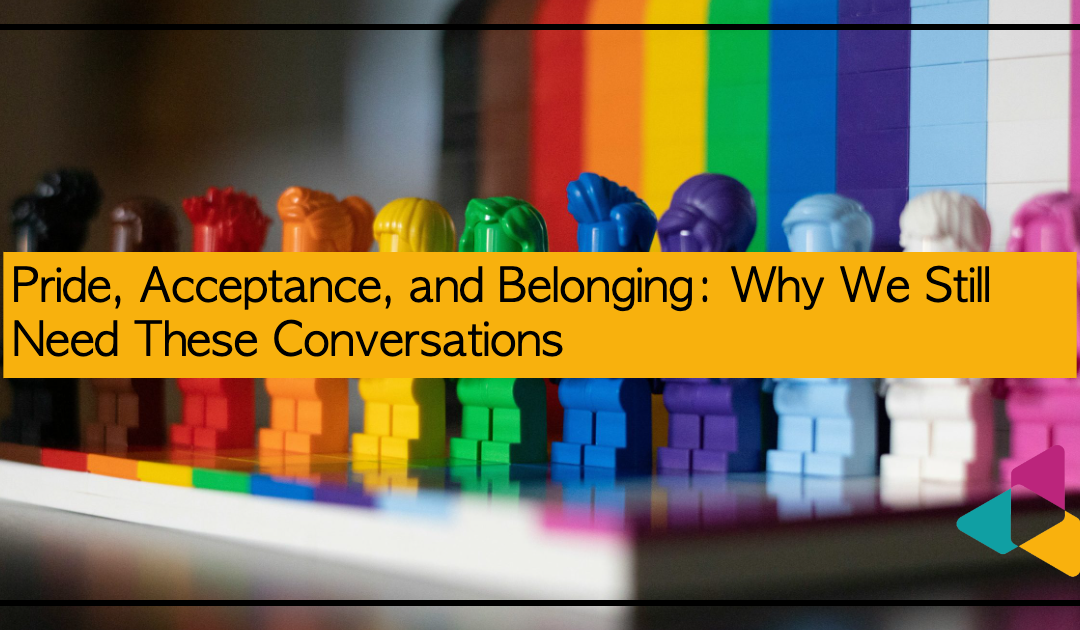
In this Pride Month episode of the Underrepresented in Tech Podcast, Michelle and Samah discuss the importance of moving beyond tolerance toward true acceptance and inclusion. They explore the challenges faced by LGBTQ+ individuals around the world, the impact of discrimination on mental health, and the role allies play in creating safer, more welcoming communities.
The conversation highlights the difference between simply “putting up with” people and genuinely embracing them for who they are. From workplace inclusion and pronouns to family acceptance and the dangers of performative support, this episode is a heartfelt reminder that everyone deserves to be seen, respected, and celebrated.
Join us as we reflect on Pride, allyship, diversity in tech, and how each of us can help build a world where everyone belongs.
Episode Transcript
[00:00:00] Speaker A: Welcome to the Underrepresented in Tech podcast, where we talk about issues in underrepresentation and have difficult conversations.
Underrepresented in Tech is a free database with the goal of helping people find new opportunities in WordPress and tech.
Hello, Samah.
[00:00:18] Speaker B: Hello, Michelle.
[00:00:20] Speaker A: It’s been so long since we said that, oh, my goodness, life has been insane, has it not?
[00:00:26] Speaker B: It has been insane. And busy, busy, busy, even. I’m recording today from Croatia, which is weird because I should be at home afterward, but.
[00:00:34] Speaker A: Nope, nope, you’re not. You’re one more place.
Yeah, I.
I’ve been. I mean, it’s. We’re what, 11 days into June already. And as we know, June is Pride Month in most places. I know that there are places in the world that have a Pride Month in other times, I believe Florida is different, uses a different week for part, for something and. And. And for. For not knowing all of them. But this is generally accepted as Pride Month in the places where we’re being part of the, you know, as. As I’ve heard lots of different ways. The Alphabet Mafia, the LGBTQ plus community, you know, all of the. The different allies, all of that. That.
That is. That is allowed to happen. Right? So there are countries where, if anybody knows that you are gay, for example, you can be executed or jailed or any number of horrific things just for being who you are. And one of the things that our platform has always said is you should be who you are, you should love who you love, and it should be not only acceptable, but embraced by the world.
I may have mentioned this years ago in a conversation with Ali, and I don’t know if you’ve heard me say this before, but I was on my school board for 12 years, and I was at a convention, school board convention for New York State, and one of the sessions was about LGBTQ students in your school district.
And so, you know, I thought, well, this is avant-garde for the time, because this was, you know, almost 20 years ago now, when people weren’t talking about that so much. And I was proud that people were talking about it. And then I was really excited to learn more.
And so I go into this workshop, and I’m sitting there, and there are two people at the front who are presenting, and the guy at the front says, ” How many people in this room consider themselves tolerant? You know, LGBTQ tolerant? And almost everybody raised their hands, and he said the thing that struck me down. How would you like to be tolerated as opposed to embraced? Right? Like we say, oh, we’re tolerant of that, well, tolerating just means you’ll put up with, doesn’t mean that you accept it. And there’s a big, huge difference between just let them live down there. I could tolerate it.
[00:03:02] Speaker B: Yeah.
[00:03:03] Speaker A: And being friends and being friendly and being human to people who don’t love the way that you love or live the way that you live. And I think that that is a travesty, quite honestly. And I think that people who are so small-minded that they can’t accept that other people have love that doesn’t, you know, image theirs or mirror, isn’t a mirror image of theirs, is just ridiculous. And that people, especially, you know, here in the United States, of course, I always say this is what I speak for because this is where I am, especially this part of where I live in the States. It’s a big country, by the way, where I am, there are a lot of people who aren’t even tolerant, much less embracing, and who have negative things to say about the LGBTQ community.
And it just breaks my heart every time because I have so many friends, and I will stand up for them. Well, I sit a lot because of my disability, but I figuratively stand up for them any chance that I get. And, I put myself, I try to put myself in the place of people who are underrepresented, so that I can understand, or at least try to understand what empathy looks like, what it feels like, and how I can be a better human and a better community member by trying to embrace the things that I don’t necessarily understand. I 100 understand love who you love, but I don’t understand what it’s like to be in a trans person’s body. I don’t understand what it’s like to be in a gay person’s body because I can only imagine it. I can’t actually be it. And so I try to put myself in those places so that, you know, mindset, so that I can be a better human. And it just, it breaks my heart that so many people in our world are so marginalized, and marginalized makes it sound fluffy. It’s not even that. But are attacked and, and, and turned out from their families and, and consider suicide and all of the things that happened because we live in not only a non-embracing society, but in such an intolerant one in so many ways.
[00:05:13] Speaker B: Yeah, I just also, I would love to start by saying that you and I are allies for the community.
Community. How much do we say we understand? We, we, we, we, of course, we support, we are allies, but like it’s as you said, it’s very difficult to put yourself in their position. And it’s also very crazy in this world that we still have to fight for acceptance.
I think you and I support the pride because, as we know and we deserve, everyone deserves to be seen, and both of us work in tech, and we know it is the importance of diversity and community building, and make sure everyone is welcome.
As I said. Also, it’s a little bit crazy what’s happening around the world. And for me, it was also sometimes I forget, I, I took it like, okay, as everyone should be in a lie. Even if you’re whatever you are, even if you’re a religious person, you believe whatever you believe, you should accept, respect, and make them feel safe. And even when they share themselves, who they are, you should respect it. And they must feel welcome because that’s what being inclusive. Even if you are a person you don’t believe, or you don’t want to believe, or you don’t want to understand, but you still need to respect, accept, and support. Absolutely. And it’s so weird for me, I always put it on the same pile like the pride, the community, the human rights activist, the people who fight for women’s equality, and the women’s rights.
You. How can I say it if one person told you I support this, and I don’t support the other? No, this is like you support all of this together.
And also the pink wash, you know, really irritates me. The pink wash, like a lot of companies and a lot of people, only speaks about the pride in that month, and only supports the community in that month.
[00:07:12] Speaker A: Right.
[00:07:13] Speaker B: And, and that’s what you see it more and more and more. I understand. I want to be like an understanding person. Now, some communities, as you said earlier, of course, there’s a death sentence, not acceptance. The other day, I watched in Tick Tock a video for a mother. Her son is coming out, and she was not accepting and crying, and he was crying, and he told her, ” This is how I feel, this is who I am. And she was like, no, you need to go marry a girl. You need to make a grandson.
And she, and he made, she made him promise her online that he will not be with another man. And it was so sad, you know, like it’s, it’s like it takes a lot of strength, a lot of energy to say that for your parents and also for the people that. But it was, that’s one video. It’s like it’s so sad that we still need to go through it.
And those who are going to come out and express themselves should feel more welcome. I don’t know. Maybe I’m too crazy. I really know it’s so natural. Like it’s fine for me.
It’s so accepted. Like how people accept me. I am a Palestinian, grew up in Syria, Jordan, the Netherlands, a crazy little bit person. But this is. Everyone is welcome. And that is like the inclusivity, like everyone is welcome. As long as we respect each other, our freedom doesn’t cross over other people. Freedom. If you want to express your feelings or beliefs or whatever, but don’t. Across the community and also accept and respect them for who they are.
[00:08:45] Speaker A: Yeah, that’s right. They. Their rights exist.
Yeah. As yours do, as mine does. As everybody says. There’s. There should be no difference.
Excuse me.
It’s been difficult in the United States for the last however many years that we’ve had the current regime. And I do use that word on purpose, running things because they are reversing so many things and you know, they’ve. They’ve reversed the names. The, the. What you can put on certain documentation in the United States. So, for example, on your passport, you can only have male or female what you were assigned at birth.
I can dye my hair.
They don’t care about that. That changes me. Right? That doesn’t matter. Oh, she. She has blonde hair in the picture, but she has dark hair here. No, it doesn’t. That doesn’t matter. Why.
Why should somebody who has completed. Not even completed, but somebody who identifies. Sorry, somebody who identifies as trans is not allowed to label themselves on government documentation the proper way and has to abide by what the government says. I just.
It’s. It’s.
Our current administration has legitimized marginalization, and worse is. I guess what I want to say is.
[00:10:09] Speaker B: It’s also how it is. I don’t know. The other day I was trying. I’m not going to mention the company name an airline that I need to put female, male, or other. And just like really irritates me. I used to have this feeling, like sometimes when they put the race like white or black, or Asian. I mean, like I never found my race there or even, even. It’s how much it was that makes me feel angry. Of course, I’m not gonna compare what I felt with the communities going to. Still fighting for their identity to be accepted and to be. To be shared. But it also, like, it’s really heartbreaking. Like, I think we talk about it a lot in 2026. We’re still talking about this. We’re still educating. And I will. I know you’re gonna be on the same page as me, but I know if. And I’m sorry, and I know you want to apologize if we use the wrong term. So please, if someone hears from us, from the community, educate us. And that’s all the time how we can use the terms, how we can say things in the right way.
I.
We’re doing something. We. We at yost new fold we have a group called Prism, and I’m really grateful for them because they educate us. We have a workshop this month, and you can join online to educate us about the community, how to stop pronouns, how to be accepted by each other, and especially in the workplace. Yeah.
I think sadly, the world is still to be educated. We still need to, to, to support each other. And in the past, like Pride month, and of course, we celebrated in the Netherlands in June. But also there’s the. This year, I’m super proud that it is going to be the World Pride in the Canal Show. In the past. Like I can skip it, you know, like now. No, we need to go support each other more and more. We need to be there to support each other because it’s really important. Because you feel like every day there’s something coming up, and the right wings all around the world are becoming more powerful. People are voting for them. Which is. Scares me a lot.
[00:12:19] Speaker A: Yeah.
[00:12:20] Speaker B: And. And they have this mindset. They want to take the community. Right. Or they’re moving the pronouns, or know what gender you were born with. That’s your gender until the last day of your life. So.
[00:12:32] Speaker A: Yeah.
Yep, exactly. It’s.
[00:12:36] Speaker B: We just.
[00:12:38] Speaker A: I know I need to do better and I. And I think most people think I already do a lot. Right. So if I need to do better and I know that and I recognize that about myself, think of all the people who haven’t tried as hard or been as embracing or has been as open. And it just makes me grieve for the children whose parents don’t accept them. It makes me grieve for the people who have seen no other way out but to take their own lives. And that’s just not acceptable. We as a society need to be better, to accept, and to embrace. I mean, I, I don’t know. I don’t have any more words. It’s.
We need to do better. And Pride month is the time to really think about how we can embrace others.
You know, there’s an organization called Free Mom Hugs, and there are lots of people who will wear T-shirts to say Free Mom Hugs. And you know when somebody says their parents have, you know, this. Disowned them. Sorry, I’m struggling for words today, as their parents have disowned them. There are all these people who always comment, I’m your mom now, I’m your grandma now. Those kinds of things. And that’s wonderful that there are people who will step in and. And try to fill those holes, but nobody can actually fill the hole. Of somebody who has.
[00:14:00] Speaker B: Who are you?
[00:14:01] Speaker A: Who raised you and loved you and then suddenly has turned on you. So I just. My heart goes out to everybody, and I want everybody to know that in our forum and with you and me, you are welcome.
You are not only tolerated, you are safe, but you are also welcome, you are embraced, and we love you.
[00:14:20] Speaker B: Yeah. And I just want to say, when you said that.
I did a quick search because, as I said, I want to be accurate about the number. It’s like 30% of the LGBTQ plus young people reported seriously considering suicide. It’s like between 1 and 10, 10% reported a suicide attempt. And this is really, really sad because the society, the people, the pressure on them, it’s. It’s like, how can I say? I feel like we suddenly went back to the 60s or the 50s. I don’t know. We. We were in the 2000s, the last 10 years. I think the world is going backward so massively instead of moving forward. I hope one day, of course, the educational system. We reach a level where there’s no need for it because everyone respects it, everyone is accepted, and everyone is welcome. And we will not be insulted. Of course. Right. Maybe we’re going to use the wrong words.
Please teach us. And sometimes I ask myself, I’m personal. Can I use this? Can I use that? From my colleagues and my friends who are in the community, it’s really nice. We need to educate ourselves, learn, grow, and make everyone safe. That is also very important and welcome. Yeah.
[00:15:37] Speaker A: Yeah, absolutely.
So if you see somebody sporting rainbows this month, please give them a smile.
You know, if. If you don’t know them, you don’t have to do any more than that. Just be kind, be polite, be encouraging, and. And, you know, maybe wear a rainbow yourself. I. I didn’t wear any today. I should have thought of it in advance, but I wore a rainbow T-shirt yesterday that just said be you, and I couldn’t wear it two days in a row. It’s covered in.
[00:16:04] Speaker B: It was my fault. We were supposed to record yesterday, and I didn’t show up like I said I would. I said I’m tired, I need to go, I have a meeting, and stuff like that. Me, I’m wearing your T-shirt because I know you support the community. And we have an amazing partnership with CoC. We have the Diversity Fund, and we also have amazing people who run and they are the leaders of Prism Group in all of Europe for our old sister companies.
So yeah say shout out for them too. To keep us well educated and teach us how to be better humans. Because that’s the most important thing. And to stop doing pink wash for everyone here.
[00:16:39] Speaker A: That’s right. I guess this month it’s rainbow wash. Yeah.
Yeah.
[00:16:43] Speaker B: Because it’s so crazy, because everyone like you should do it all of. How can I say? All of the year.
[00:16:49] Speaker A: Yeah.
[00:16:49] Speaker B: One thing. There was one powerful ad. I think it was a Sweden in Sweden. I don’t know if it’s. I will ask my colleague Niels to reshare it with me, that sometimes the powerful wear the pride or the rainbow because then it’s the out showing that person going and it’s nervous, and the person in front of them wears a bracelet or they have their keychain something on it or. Or behind them, that you are welcome. So it was then the vibes changed when the person was nervous to talk in a job, or going to talk with someone, or attending a party. Then it’s like it’s. It’s totally different.
[00:17:24] Speaker A: Yeah.
[00:17:25] Speaker B: Also, I understand that I’m one of the people. I’ll be honest. I wear it as. As long as I remember to take them when I’m traveling, my pins and my stuff. But everyone is welcome and safe around me and around me.
[00:17:41] Speaker A: Yes.
[00:17:41] Speaker B: And hopefully one day we reach a level where all of the community feels safe. The rights being recognized, and we don’t have to talk about how difficult to put your pronouns or change your gender or let people accept you, your family, and friends.
[00:17:59] Speaker A: Wouldn’t it be nice if someday this podcast didn’t need to exist?
[00:18:03] Speaker B: Exactly. I. I would love to talk to you about. Maybe we can talk about the flowers, you know, or maybe we’ll find something.
[00:18:09] Speaker A: We’ll find something for sure. Because I enjoy our time together. Yeah.
We could have a whole podcast on rubber ducks. I bought myself one. Oh my God, it’s so cute.
[00:18:19] Speaker B: I love it.
[00:18:21] Speaker A: Little statue. If you. If you’re listening and not watching. It’s a rubber duck dressed as the Statue of Liberty, and it says New York. I was on vacation last week in Boston and Connecticut.
Mystic Seaport, Connecticut, and then also New York City. So I had fun. I had a fun week, and it was pretty awesome.
[00:18:40] Speaker B: But you will deserve it. And that’s why we also, we stopped a little bit for a while. You were busy, I was busy. We need a little bit of time off, and you and I, we talk. The best time to take a break and come back is the pride of the month because Yeah, for us.
[00:18:54] Speaker A: Absolutely.
[00:18:55] Speaker B: Hit up, like, hit, how can I say, start up a new wave or a new thing in our podcast. And this is the best time to really start it.
[00:19:04] Speaker A: Yeah, absolutely. So we’re excited to keep it going.
As always. If you have topics, we would love to hear them because, you know, there’s. Sometimes we wake up, and we’re like just searching online for what’s a recent topic or something to talk about. But if you’ve experienced something, we can keep you. You know, we don’t say your name. If you don’t want us to say your name, we won’t say your name. But we love the topic ideas. So if you have a topic, you can DM either one of us. You can, you know, DMR.
What do we have a Twitter account and we have a LinkedIn account. Do we have? Yes. LinkedIn account as well. So anyway, any way you can get in touch with us, we would love to hear your thoughts and ideas. For the future. So thank you for being with us this week. And go Pride. Right, I know.
[00:19:50] Speaker B: Go Pride.
[00:19:51] Speaker A: I love it.
I love it. All right, we will see everybody else. We’ll see you next week.
[00:19:58] Speaker B: Next year, Next week. Bye.
[00:20:02] Speaker A: If you’re interested in using our database, joining us as a guest for an episode, or just want to say Hi, go to underrepresentedintech.com. See you next week.
Michelle Frechette
Host
Samah Nasr
Host