
Show Notes
AI is changing the way we work, and the opportunities are incredible. But is everyone getting an equal chance to benefit?
In this episode of Underrepresented in Tech, Michelle and Samah explore how artificial intelligence is reshaping the workplace and why women may be among those most affected by AI-driven automation.
From jobs at risk to exciting new opportunities for entrepreneurs, we discuss both sides of the AI revolution. More importantly, we ask: Are we doing enough to prepare women and underrepresented communities for the future?
We talk about the importance of accessible education, learning new skills, and making sure technology creates opportunities rather than widening existing inequalities.
Because the real question isn’t whether AI will change our future. It’s whether we’re making sure everyone can be part of it.
Tune in for an honest conversation about AI, equality, and the future of work.
Episode Transcript
[00:00:00] Speaker A: Welcome to the Underrepresented in Tech podcast, where we talk about issues in underrepresentation and have difficult conversations.
Underrepresented in Tech is a free database with the goal of helping people find new opportunities in WordPress and tech.
Hello, Samah.
[00:00:23] Speaker B: Hello, Michelle.
And happy birthday. Happy birthday to you. Happy birthday to you. Happy birthday to Michelle. Happy birthday to you.
[00:00:37] Speaker A: Thank you, thank you, thank you. I did just complete one more trip around the sun, as they say. So I’m very excited. Before we talk about any of the other things, I. I know I already told you this before we started recording, but if people watch us, they see behind me. And usually my office has been so pristine and so nice and organized, and it’s been a chaotic mess this year because my boyfriend moved in and we’ve been having to rearrange things and move things. And so you can see his chair here where he sits at his desk right next to mine. But I used to have a big storage cabinet there. And so everything that was in the storage cabinet came out and put into tubs and is now across the hall of my storage room, which means I can find nothing. So he has to always go find things. And then I had a chair in the background that I bought where people could sleep on it. Like, it opens up, but the cat shredded it, so I gave it to his mom for their cabin. And now I’ve been able to move our 3D printer in here, which I’ve never used, but looking to hopefully make some things soon.
So it’s my birthday, and what I asked for for my birthday this year was for him to spend the evening this. This evening, tonight, helping me clean this room. We’re going to take everything off my desk. Deep, clean, clean. Get the cords run the better way so I don’t have spaghetti on my desk. Take down the curtains, put up new curtains. Like, I’ve got plans for this man tonight, so.
[00:02:00] Speaker B: And then, so… And it’s in your ex also? You sure?
[00:02:04] Speaker A: Yes, it is. Yep.
[00:02:05] Speaker B: And let’s be honest, this is one of the best birthday gifts a woman can get. Any woman around the world, or any person.
So I think it’s really. Yeah. Congratulations. Enjoy your evening. I’m jealous. Thank you. I should do the same with my husband. When I see him, like to reorganize. Yeah.
The mess on this side or in this side.
This one. Maybe we need to organize it a little bit.
[00:02:29] Speaker A: He also gave me some blind box things, which I love, like little tchotchkes on my desk. And he gave me this emotional support Dumpster fire?
[00:02:37] Speaker B: No, this is so cute.
[00:02:38] Speaker A: 1. So that’s on my desk too. So. But one of the things that we’ve talked about a lot this year. How’s that for a transition?
One of the things we talked about a lot this year is AI. Of course, AI is leading every conversation, whether it’s good, bad, indifferent. It is definitely leading every conversation. I have people in my life that refuse to use AI because of the impact that it has on the environment, especially in underserved communities here in the United States. For sure, however, you cannot get away from using AI. Like, even if you Google something, you will get an AI response, not just a list of sites to choose from.
So, like, if you Google, like, what does such and such stand for? You’re not going to get a bunch of different websites. You’re going to get Google’s response to having read through a bunch of those articles already or crawled through them, what they think it is. And so you’re using AI no matter what you’re doing anymore. I think even our phones, our smartphones, our Siri, our Alexa, all of that is AI. Yeah. So it is definitely part of the fabric of our lives. And I don’t see it going away anytime soon. I mean, I even, I had, I had to go for an MRI a few weeks ago for my hip and my right shoulder.
And I, I haven’t seen my doctor yet to be able to find out what the next steps are. But I didn’t understand all of the medical jargon that was on the report. I was able to feed it right into ChatGPT to discover what the biggest issues are with. With my hip and my shoulder. So it’s very useful tool. I agree we have to use it correctly.
And one of the things that I read in the article from the New York Times, which of course we’ll put in the show notes, because Sama is so good at that kind of thing for us.
I rely on you for so much of that. And you were just. You are such a good partner.
Thank you.
But one of the articles from the New York Times was that women are perhaps disproportionately going to have fewer career options because of AI and because of the roles that women have traditionally, by and large, been able to fill in business, such as executive assistants, secretaries, you know, organizers, things like that. And so a lot of that is being taken over. Like, you almost don’t even need a virtual assistant anymore because you can use AI for a lot of those kinds of things.
Depends on how much you’re willing to trust AI and things like that. I always say trust but verify with anything. Of course it has gone errant a few times in the last few weeks. I think it actually filed a homicide report Claude filed a homicide report erroneously with a a police officer a police station in Tennessee last week. Luckily it went to spam emailed them instead. But it it’s definitely one of those things that we have to keep track of or it will keep track of us.
And I am being dragged into being dragged into using it more and more because I think I just have to and I have to learn it better and I’m going to do some online classes to be able to understand it better.
But I’m worried for a lot of people whose jobs will eventually be gone because we’re going to rely or at least fewer right because we’re going to rely on AI for things that we right now would use a virtual assistant for or an in person assistant for I with you I’m talking a lot. I’ll let you. I’ll let you get a word in soon I promise But June Liu and I run WP Wonder Women and we’ve just we took a several month break for both of our mental health but we we started launching it again this week and I have ChatGPT sending me a list of women in WordPress who have accomplished newsworthy things over the course of the week. I used to spend hours between the two of us we’d spend like four hours combing through social media looking for women’s accomplishments and that’s not a good use of either one of our time but I don’t have the money to pay an assistant so I’ve been using ChatGPT but that’s a job that would have necess normally either been done by somebody or hired out to somebody else. What are your thoughts?
[00:07:07] Speaker B: I think I agree with you. AI is everywhere now and you need to learn the skills to use it. I also look at it it’s really helpful because sometimes, instead of you writing the whole project proposal or replying to an email you need to spend that time. It is doing let’s say 90% of the job for you. I’m really a big fan. Also, there are many AI tools and we need to educate ourselves how we can use them and get the most benefit from them.
I think one of the biggest concerns about AI is not necessarily that AI will replace people, but that it could make the inequalities we already have in the workplace even bigger. As you know, for many years we’ve been talking about creating more opportunities for women. Encouraging women to enter technology, learn new skills, support career development, and make the workplace more equal.
Sadly, I think the article that you shared—to be honest, I put it in ChatGPT quickly.
Most of those jobs are in danger at this moment.
As you said, there’s AI assistant, there’s AI agent, even you can build your own, your own AI that help you to add appointments to calendar, send emails women are taking or let’s say more, more those jobs are occupied by women. What concern is that many of those jobs are most exposed to AI driven automation. But are we doing enough to support women? Are we giving them opportunities to learn more new skills? And as if you know, not everyone has the same access to the same technology, the same education.
We talk about it a couple of times, the gap between communities, even in one country, the city where you live, you get better education.
And believe me, I think you and I, we talked not a long time ago, maybe a long time ago about the AI will take, like, 90 million jobs, but it will create 130 million.
Right? So are we giving free courses to educate women? Are we also making sure our senior citizens are up to date with AI? As you know, for us, we sit, we watch the video, we learn, but maybe we’re talking about people in their 70s or 80s who would also love to use them.
I agree with you, AI is amazing. Sometimes if I want to buy something or I put a couple of things, take photo, how can I cook? I want to cook something. This they give you immediately recipe or how to use things or even like oh, how far is this from that? And it’s so amazing. Yeah, I think it’s the most important thing what we are doing. Not me and you, I mean like the companies, the community, the government, what are they doing to make sure those women will have other opportunities in another career?
[00:10:10] Speaker A: Yeah, I agree 100%.
I do think back though. I mean I’m sure that this kind of the sky is falling. The sky is falling, you know, kind of. Do you know that story, the Chicken Little the sky is falling.
[00:10:23] Speaker B: I love to hear it again.
[00:10:24] Speaker A: Okay, the idea is this is the barnyard animals, right? So the an acorn falls out of a tree and it hits this chicken named Chicken Little and Chick and it looks around and it doesn’t see anything. So it assumes that the sky is falling. And so it runs around telling all the barnyard animals the sky is falling. The sky is falling. Of course the sky is not falling. It’s one chicken who misread, you know, kind of thing. So, but, but in, in, in America we say, oh, the sky is falling when it’s like something that is not really.
[00:10:53] Speaker B: Yep.
[00:10:54] Speaker A: Needs to be that scary.
I think back to the fact, like I was watching an old movie the other day where they had switchboards and you called a company and they took a thing out of one. Like I took a plug out of one place and plugged it into another to connect here we don’t have to do that anymore. But how many switchboard operators, which were mostly women, especially throughout World War II, how many of those women were like, oh no, now what am I going to do? Well, back then it was like, well, now you get to stay home and raise a family. But we don’t make women do that anymore.
But we were worried that email was going to kill the postal system. I get more mail today in my mailbox than I did 10 years ago because people are trying to like, oh well, everybody’s using email now. Let’s just mail something to them. And it’s all junk and it’s all whatever bills that aren’t online or, you know, whatever. But, but yeah, I think, I think that if we do provide the right education, it’s not that women are losing their jobs or anybody really. It’s just that we have to change our skill set to grow with the future.
When I went to College, it was 1987, long time ago.
I was, this was before anybody was interneting anything, right.
I was in 1987, the first person in my entire dorm to have a computer. All it did was plug into the wall. There was no WI fi, there was no ethernet cable, there was nothing. It was just literally a glorified typewriter, pen fed, matrix paper.
And at that time, nobody had home computers. There weren’t laptops. All of that hadn’t developed yet. And yet we didn’t worry quite as loudly that, well, now we have technology in our homes now. You know, you could order groceries, you know, like, who’s gonna pay the milkman? Well there, that’s not a job anymore. There is no milk van. They don’t bring milk to your house. So I guess my whole point is to say things change.
I don’t go out to my garage and feed oats to my car because I have a car, not horses and on carriage.
[00:13:02] Speaker B: So we have to.
[00:13:03] Speaker A: But, but the rate and the, the speed at which AI is taking over is a little scary. I’m not Going to lie about that. It does feel like it’s just going rogue a couple times. It’s doing things. And like I said trust but verify everything that I read that I, I ask it a question, I get an answer, I go and I verify the answer before I tell anybody else that that’s what’s the, you know what’s right.
Um, because it’s only as good as we as human beings are and we are also fallible.
[00:13:34] Speaker B: Yeah.
As you said we are both of us not against AI. I think actually AI can create more opportunities especially for people from underrepresented communities for women. Now creating your website, creating your store online has never been easier. You, you have the tool, you can create it in two three minutes you create a website two, three minutes you can create an app to sell your things.
So it’s really amazing opportunity for people who are building communities or women who want to have their own business online and selling it. The thing is are we giving those people the right education? Because now some, a lot of companies and really appreciate for them for their platform they give you free courses or how to use the platform or how to help you. But are we giving it in the school or night school? I’m not talking about kids. Kids, they learn it fast, quickly. I’m talking about people who already having a job, having a family to take care of. Are we giving them education? I will make sure that they have skills for the future to continue.
Other thing I think both of us believe that also the technology doesn’t create the equality. I think this decision from the company, from the government or even when we build a tool, how we can explain it to people to use it. It’s not only targeting the young generation or the people are entering the workforce or even the kids. We are also we should also make our educational materials suitable for older people. And I think the most important question if we’re going to look 10 years from now, if you’re going to look back like who will benefit from this change? Are we giving everyone the right education? Are we supporting people to be, to be known or sorry to have the knowledge of using the AI tools. Because a lot of countries around the world they’re way behind because of the internet connection also some sanctions and I’m not talking about political sanctions but also from their own government, from all of them. If you’re talking about the south globe countries for them it’s really important that you are you having food? They don’t understand the AI that okay, if I have small factories a Woman is creating something and she wants to sell it online. Or even the guy have some. Is he has a service fixing cars on the road. Is it like okay if I put it for Google Maps or if I put it a small website online. The people on the road know they can come talk to me, they can reach out to me. All of this maybe I’m going all around with my.
My opinion. It all comes down to whether we have time to provide education.
So as you said the, the. The women on the. And the telephone that they still have job in 10, 10 years and again it will open 130 million jobs for people around the world. So as you said, I think that was the other day I was watching fun video that people were used to be having. You know, the financ.
This thing. I don’t know how they called it. When you calculate the wooden thing, the old thing and when the calculator came and the advocates.
[00:17:05] Speaker A: Advocates.
[00:17:06] Speaker B: Yeah. And then people get scared.
[00:17:08] Speaker A: What’s she talking about?
[00:17:11] Speaker B: And the Excel sheet is going to take people’s jobs. No, it opened up new jobs. When we look now at finance and the stocks and the world economy, we didn’t have the same vision 25 or 15 years ago. So yeah, it’s.
[00:17:26] Speaker A: Yeah, change is good. It’s just that we have to make sure it doesn’t happen so quickly that it becomes a detriment to us.
[00:17:35] Speaker B: Yeah.
And I should learn something to turn off my notification while we are in the meeting.
[00:17:44] Speaker A: You could ask. You could ask ChatGPT for a summary later of all your emails today.
[00:17:49] Speaker B: And I. I don’t know, I use. I use a lot of AI tools and, and, and for me, my husband is 10 years older than me but his work is different from mine. Every day we hear AI 500 million times. If we have a drinking game, we would be drunk after 30 minutes.
[00:18:08] Speaker A: Yes, for sure.
[00:18:10] Speaker B: But when I was telling him once I was showing we’re gonna go vacation in the past. Yes, maybe I’m a little bit lazy.
We get the books, we watch, we read. We spent like two months planning for vacation.
And I was lazy. I just put it in ChatGPT. I want to go. I want to spend this time. I want to go to this country. Can you make me a road we have to spend here and hotel recommendation and feeling.
He did it in like 30 seconds. And I sent it to my husband. He said so proud of you. You finished all of this Honestly at the beginning I said yeah, it was me.
And he started also like joining and doing things which Is.
Yeah. Which is, which is really good. I believe we need to look at how it helps but also at the same time take care of each other. And also we need to talk about how women are the highest percentage because I think. Let me check ChatGPT, my friend, ChatGPT because with the article that you shared, it showed that it’s 29 females will lose their jobs because women are of course beside the secretary is women assistant is a woman most of the job most of the time. Or. Yeah. So I think we should really start talking and thinking how we educate those women and all or even people underrepresented in the underrepresented communities, how to make sure they are all of us at the same time have the same knowledge and the same education.
[00:19:46] Speaker A: The line from this that was like. What was like, wow. Is office and administrative workers consistently rank among the highest jobs at risk of AI automation. And of the 6 million workers who are both at risk and less likely to adapt, over 86% of them are women. Which is just like. That’s a big number.
[00:20:07] Speaker B: Yeah, yeah. And I’ll say I don’t want, I don’t want us to look back 10 years from now and realize that while we’re celebrating technology progress and how things are becoming easier, we forgot about the people who needed the most support because we will still look back and we move really fast.
I think 30 years ago, 20, 25, we didn’t have WI fi and now if you told me like 4 years ago that I can write project proposal in 5 minutes, I asked ChatGPT write it in 1 minute. I take a look. I updated things left and right things. That’s amazing. Instead of spending half day thinking and putting your post it on the wall and start thinking how are we going to do it? Just give him the information. And he created even slide creating presentation.
[00:20:56] Speaker A: Yeah, exactly, exactly.
Well, I plan to use it more and more and use it to the right benefit.
There’s a lot more we could talk about this. For example, like Automattic just came out with something called WordPress just came out with something called Space Fast.
And all you have to do is tell it what you want and it creates your website in like 30 seconds time. And so I played with it and like Nick is my boyfriend is gonna. I bought him a Santa suit. So we’re gonna do some photography sessions with like pets and things like that to help raise some money for a local animal. Shel was just like thinking about how like ChatGPT and other things are so useful in Setting those kinds of things up and, and really working through a lot of that stuff. So yeah, it’s, I’m going to have my Santa Claus, but it’s going to be because I used ChatGPT, figure out where the shelters are and who needs
[00:21:54] Speaker B: help, that it’s very easy if you have your own business. You know, like sometimes we understand obligation of life or circumstances that women need to stay at home or whatever. Even men or whatever you are, whatever your gender, you need to stay at home and you like have some small business. It’s so easy to create the website in the whole time. You needed to find someone to create it, and even someone to maintain it. You need someone to help you to reply to emails. And all of this, all of this can be automated. And to be honest, it’s really amazing that you enjoy life, enjoy your time, do other things maybe like that. And time is really important I think for all of us to, we would love to spend time more with the family, we would love to go for more walks. But it’s amazing to use it. But let’s not forget that we need to educate people how to use it and to get the most benefit from it.
[00:22:49] Speaker A: Absolutely. Very well said.
Well, I don’t know what we’re going to talk about next time. I’m going to try not to only find AI articles, but that one was really, I thought pertinent and really could serve us well in our audience today. So thank you for reading it with me.
[00:23:03] Speaker B: And one last thing. We always, we wear the same color, which is your.
And for me it is weird because when I, I, I buy things and I come home and I say like, oh my God, it’s like your color, you know, like, and I’m wearing it too.
Next time we will, we will see how we, what color we wear.
[00:23:23] Speaker A: That’s right.
[00:23:23] Speaker B: That’s right.
[00:23:24] Speaker A: Oh, and let’s, let’s tease out something. If you’ve stuck around with us this long today we’re going to tease out that we’re going to be running a summit for women speakers and women in tech on International Women’s day, which is March 8th of next year. It’s a Monday so you don’t have to give up your weekend to watch it, but we will get it that be getting that site set up very soon. So we’ll put out the call for speakers there and it will be free to attend online. Even though it’ll be all women speakers. We will, we hope that men and women and non binary people and everybody in between will be able to watch it and learn from some of the most amazing women in the tech space.
[00:24:01] Speaker B: Yeah.
[00:24:02] Speaker A: So standby. Not even to tell you what the URL is yet, because right now it doesn’t hold anything on it. But, yeah, we’ve been working, so it’s going to be good.
All right.
All right. Well, thank you for hanging in there with us. Anything else you wanted to add? Some.
[00:24:17] Speaker B: No, nothing. Just learn about AI, and if you can educate someone around you and help them out, go for it.
[00:24:23] Speaker A: Absolutely. All right.
[00:24:24] Speaker B: Bye.
Bye.
[00:24:28] Speaker A: If you’re interested in using our database, joining us as a guest for an episode, or just want to say hi, go to underrepresentedintech.
[00:24:37] Speaker A: See you next week.

Michelle Frechette
Host
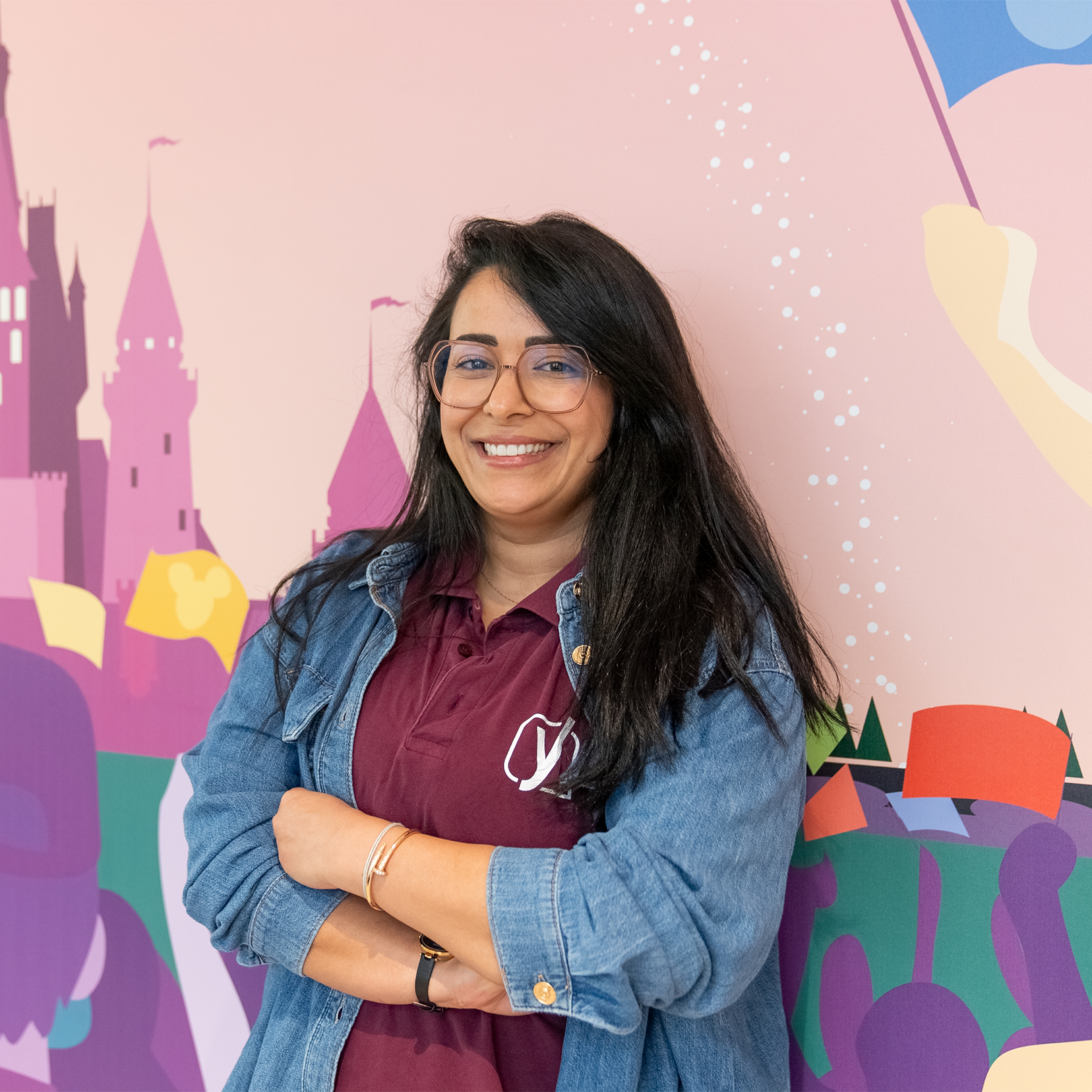
Samah Nasr
Host