
Show Notes
Promotions aren’t just about performance; they’re about power, bias, and access.
In this timely and deeply honest conversation, Michelle and Samah unpack what promotion really looks like for women, women of color, and experienced professionals in today’s workplace. Drawing on recent research and real-life experiences, we examine why minority women are the least likely to be promoted, why Gen X talent is often overlooked, and how structural bias, rather than a lack of ambition or skill, continues to influence career outcomes.
The discussion includes gatekeeping, age bias, self-advocacy, unequal pay, and why diversity efforts often overlook age and lived experiences. Most importantly, we discuss what needs to change in organizations, leadership, and ourselves if we truly want equitable career progression.
This episode isn’t just a conversation. It’s a call to do better.
Episode Transcript
[00:00:00] Speaker A: Welcome to the Underrepresented in Tech podcast, where we talk about issues in underrepresentation and have difficult conversations.
Underrepresented in Tech is a free database with a goal of helping people find new opportunities in WordPress and tech.
[00:00:17] Speaker B: Hello Samah.
Hello Michelle.
[00:00:22] Speaker A: It’s been a crazy autumn into winter, so we haven’t recorded as often as we would like. But. But I don’t know about you. I’m turning over a new leaf in the new year. My resolution is to actually find a time that works better than 8am on a Monday morning for me and do this on a weekly basis. Of course, there are weeks that will, that we just have to roll with, and that things happen, but we will be more regular in the new year for sure.
[00:00:49] Speaker B: Yeah, the same.
[00:00:50] Speaker A: Yeah.
[00:00:50] Speaker B: I mean, this is, as I told you before, this is one of the things that gives me joy. So I would love to do it tomorrow. And yes, I agree Monday is also crazy for me. So let’s wait for a new day.
Yes.
[00:01:04] Speaker A: And then life will be better after next we have a. We do have a guest next week who is supposed to be here this week. We’re going to be meeting with some women from Bosnia and Herzegovina, talking about the Balkan area and what it’s like for women in tech in that area. They were going to be with us today. Unfortunately, an illness postponed that for a week. So hopefully they will be. Will be able to join us next week, and then after tha,t we will be off for the week between Christmas and New Year. We’ll come back in the new year.
Hopefully.
If you’re listening to this, you don’t care what time we record, but we do.
So we will find a new day that makes us a little more regular in being able to do that.
But we did find a topic that we’ve been kicking around for a couple weeks now and as you just said before we started recording, it’s a really timely topic too because we wanted to talk a little bit about what it’s like for people, for women, for people of color, for people of a certain age to be promoted within their company.
And the research shows what Sama.
[00:02:07] Speaker B: Okay, the first article is from Forbes. It’s Minority women are really least likely to be promoted in corporate America today.
This article highlights systemic barriers that minority women face in corporate America, showing our statistics. Oh my God, my English is not good.
[00:02:27] Speaker A: That’s a hard word to say.
[00:02:30] Speaker B: No, it’s sometimes the ring off. Okay, let’s go back to the Series showing that some numbers, which are the least likely group to be promoted despite strong performance and high ambitions, are often overlooked due to a biased lack of sponsorship and inclusion from informal networks where investment decisions are made. The piece emphasized that the issue is not a pipeline problem, but more a structural one. And also of course, after the new, let’s say, administration, the United States and the DEI will also do all of this. These numbers are increasing and rising higher and higher.
This article is really important because I also remember you and me at the beginning of the year, we talked about self-advocacy, and also we talked about a lot of those women coming from under, say from different cultures or from different environments or women of color that we always have so difficult to advocate for ourselves. Like, yes, I deserve that job. Yes, I need it. We are all women, whatever our color, shape, or ethnicity; we always have this poster syndrome. You know, we need to fight it at the beginning of our careers. But specifically for women of color and women, let’s say from different ethnicities, when they move to live in the United States and Europe, they have it more that we need to accept whatever and then try to promote ourselves to our bosses or the leader or the decision-making. It’s become more and more difficult. And imagine with this combination of. But it’s not only that we have an issue to advocate for self, but it’s still a very difficult system to beat. Like, if it’s already decided by the people above, we are at the last of the list to get promoted. We are the last to get hired or to get noticed, or we need to work 500% more than any other ethnicity, so that we can be noticed.
[00:04:35] Speaker A: One of the, one of the things that I had read and at some point in time, so I don’t have anything in front of me to quote, was that not only is it difficult for women because men often hold the seats in position of power, but that even women who hold positions of power sometimes feel threatened by promoting other women because they feel like there’s only room for one woman in this boys club that’s usually at the top of an organization and if they bring another woman in, it might mean that, that they get ousted for the. For the younger or the whiter or the whatever, right? And so that instead of women advocating for women, sometimes women gatekeepers keep other women from climbing the ranks because. Because of that, because they worry about their own roles. And obviously that’s not something you and I do because we are always promoting people and wanting to see more people succeed and more women, and more people of color underrepresented groups.
But it’s sad to me that that would be the case.
It’s already hard enough for us in a male-dominated industry, then for other women to also gatekeep us out. So I just wanted to kind of throw that in there as well.
[00:05:50] Speaker B: Yeah, I remember once you said, I think one of our, one of our episodes. I remember you said something really nice that women, when they go up in the ladder, they should give their hand to pull up other women’s And I agree, sometimes like we also need to push the women to go up, and also when we go up, we need to give our hands to pull other women up.
The second, I think the second article, it’s also the multigenerational workforce, has Gen X been overlooked in the workplace. It’s not only that I know it’s funny, it’s also a strategy that’s laughable. Like it’s not only if you’re like a woman, it’s also with the age difference and also with your ethnicity, which adds a lot more difficulties.
This article explores the often overlooked role of Generation X in today’s workforce positioned between millennials and baby boomers and X employees are highly experienced, adaptable, and pragmatic, but however there are frequently excluded from leadership development, conversatio,n and future-focused initiatives. This article is really amazin,g but also argues that organizations risk losing essential knowledge and stability by failing to access, actively engag,e and invest in Gen X talent.
The thing is also now because everything is now AI, as you know, everyone is AI AI. And I think couple of, I think couple of episodes we talk about that AI will cancel 93 million jobs around the world until 2030. But it will open 140 million jobs. So then we will gain an extra 50 million jobs. The only thing is like I feel like all of the focus now is going to go on Millennials or Gen Alpha or Gen Beta. I don’t know what I’m really bad at in their names.
[00:07:44] Speaker A: Younger generations.
[00:07:46] Speaker B: Younger generations under 30s.
[00:07:49] Speaker A: Yeah.
[00:07:50] Speaker B: So yeah. And that’s why Gen X is like putting it on the side. Yeah. What are your thoughts on that?
[00:07:58] Speaker A: Yeah. So I am Gen X. Right. I’m 57 years old.
Excuse me. And I worry about that too. Right. So it’s like people see somebody in their 50s and think Oh, oh, they’re aging out. Why would I invest money in somebody that’s going to retire soon, when the truth of the matter is most of us have grown up in a period where our parents don’t have much to give us. We’re not retiring on generational wealth. Most of us will have to work at least into our late 60s, if not into our 70s.
We have incredible institutional knowledge, we have incredible adaptability, as you sai,d and the fact that, you know, I’m 57, I could work another 10 or 15 years in this industry. When you hire somebody who’s, you know, Gen Z or Alpha or Beta or whoever the younger generation is, they’re usually looking to hop from one job to the next for upward mobility. Whereas you hire somebody like me. I’m likely to stay if you treat me well and I have the salary that allows me to continue to have, you know, to be able to earn the income that I need to survive.
So it seems like a better investment actually to invest in somebody like me who’s adaptable and willing to learn AI and all of the things. As a matter of fact, I’ll tell you offline, I’m about to take a class, and I’ll share with you another day that will make me even more valuable to employers in the future or to contract work. But yes, I think that overlooking Gen X is a mistake. Absolutely. And I don’t just say that because I am Gen X, although I am for sure not.
[00:09:40] Speaker B: But also I think also the DEI of course we are. It’s very.
Would you bring diversity from underrepresented? Like I think one of the things is always overlooked or comes down to the list. It’s the age, you know like all the time the religion, the sex, the orientation where you are from it’s always climb on the top and also the disabilities but also the age all of the time at the end like because I think that is a lot of companies should be having more age inclusive promotional strategy and I think that that is something that’s really important. We should also, in our sector, let’s say where we work in IT, and whatever, all the time, they go forthe young generation, their 20s and 30s, because at the 40s and 50,s we consider oldies, grandpas, or grandmas, because then they. That is not acceptable because we have the experience, we have the skills, we have the education, and I think that’s something a lot of companies should revisit their strategy.
[00:10:47] Speaker A: Agreed, absolutely.
[00:10:48] Speaker B: Yeah, but also it’s so funny that those topics you find a lot of articles and it’s funny. I don’t want to say it’s funny like me, I’m laughing when it is. I’m not happy, but yeah, it’s interesting. There’s a lot. Yeah, it’s very interesting. There’s A lot of how can I say A lot of articles talking about those specifications, and also especially for Gen X or let’s say older workers overlooked for promotion. The third article is Gen X overlooked for job promotions.
And this amazing article shows like a data a lot of data about how they did a lot of studies to show that, and let’s say mainly this article focuses on how older workers continue to be passed over promotions despite strong performance. Employers often prioritize potential over proven results.
And also this article criticized how DEI offered sometimes neglect age inclusion and words that excluding older workers undermines diversity goals and weaknesses organization resilience because I remember we talked I think, I think more than 100 times how important the diversity at work and how we should look at it from all of the angles because I know where your ethnicity, your religion, your sexual orientation, disability. Of course, we can spend the next 15 minutes talking about how you can add diversity to a team or a company itself. But also age should be our focus. It’s not like I don’t believe we should rank them from the least important important. All of them might believe they are important. A lot of companies should focus more on it.
[00:12:43] Speaker A: Yeah, I think one of the things that we don’t do well as far as promotion, asking for raise,s those kinds of things as as wome,n especially of a certain ag,e say Gen ,X and you know, even whatever is after Gen X, Gen Y, Gen whatever, Millennial. I don’t know.
[00:13:04] Speaker B: Gen X, millennium. I’m really bad. I’m gonna search it while you’re talking.
[00:13:08] Speaker A: Is is that you know, I was taught as a woman, and I’ve mentioned this before, that I take what’s given to me as opposed to advocating for what I want and need. That is how I grew up. Right. Is that I should not be a loud voice? I should not be somebody who says I want. I should be somebody who takes what they’re give,n and they’re grateful for it.
I may even mention that my high school guidance counselor didn’t think I should go to colleg,e even though I graduated in the top 20% of a class of over 300 people.
Actually top 10% in over 300 people. It doesn’t make sense to me that we don’t self-advocate, except that we were taught that and to be grateful for what we have. But you and I did an episode. I was just looking it up. September 13th of 2024. I can’t believe it was that long ago.
Empower your VOIC,E the Art of Self Advocacy with Shelvi Waklu, and we can include the link in the show notes as well.
But it was talking about how self-advocacy is what you absolutely need to be able to break through professional barriers, especially in underrepresented communities and fields like tech. Right. And so Shelby actually wrote a book called Self Advocacy and has spoken all over, including Fortune 500 events, et cetera.
And so we need to do better at self-advocacy and asking for and giving, providing, not just asking, but providing examples of why we are deserving of the things that we ask for. It’s not just, excuse me, sir, I’d like some more Oliver Twist with a porridge bowl. Right?
It’s more like, look at all I accomplished this year.
I deserve the same as other people or even better.
And so because it’s not easy, it is not easy to, you know, to do those kinds of things if you are of a certain age or you were raised a certain way, or that’s just kind of your culture, your belief system. But it’s so important.
[00:15:17] Speaker B: I remember that podcast because Shelby, I read her book The Self-Advocacy, and it helped me a lot. I.
I remember, I think I said it to her because I was really, you know, sometimes you promote yourself. But where I grew up and coming from, like this, consider ego, then we should not do it a lot. And it’s especially for us women because we have, if there’s a 10-task application for a job, we have to take 10 out of 10. We have to be like really good at it. While men like, oh, I know how to use a computer, let me apply for this job. And that is something like we are trying like to promote ourselves more, of course, because also when we ask, you feel like asking, Can I have it? Like, no, I deserve it. I work hard. Those are the numbers I get. That promotion should be mine. And while I think sometimes you say like, Oh, can I ask for salaries? And that’s also sometimes cultural behavior where we grow up, or it’s so difficult. And also, you can see there’s even for now not a lot of women in workforce all around the world. It’s not only specific. In the States or in Europe, women numbers are, are lower than before than ever before. So I think that is also sometimes the women like, okay, I don’t want to put myself under a microscope because I’m scared of getting fired. And also everything, all of the changes around the world, there are difficulties in getting a job. So a lot of factors sometimes ,like, yeah, let’s stay in our safe corner. But yeah, I think we should do More self-advocacy for. For ourselves. Yeah.
We will link it in the bio for sure. It was a really good one.
[00:16:56] Speaker A: Yeah, absolutely.
[00:16:59] Speaker B: I think. Yeah, I think that’s it. Oh no, there’s one. One extra article. Okay.
[00:17:05] Speaker A: I did a lot of article searching for you for this one.
[00:17:08] Speaker B: Yes, you’re really amazing one for me. I just like you, just send me five or six articles, and then I said Okay, this is heaven. You know, let’s go for that.
I think the last one is talking about performance bias against women of color in management.
This article explores how women of color face bias when stepping into management roles for the first time. Mistakes are judged more harshly. Feedback is often vague or subjective, and expectations are not realistic. The piece highlights how biased performance evaluation can make the leadership, or let’s say, the future of those women of color in the managemen,t so difficult. And most of them are also. That is not encouraging other wome,n or they also at the same time for early quitting and moving to other companies. It is a really interesting article because like it’s sometimes you think that we women, all of us face a bias, but women of color that they have double it or an extraordinary number of it. Which is.
[00:18:19] Speaker A: Yeah.
[00:18:19] Speaker B: Which is a really shocking truth to be honest.
[00:18:22] Speaker A: And that goes along really.
I don’t want to say really well in like a positive way that that coincides or whatever the right word is with equal payday because equal payday is something that happens every year. And. And that’s where women and I use quotation marks because we’re not all the same women. Right.
Have equal pay.
How far. How far a woman has to work into the next year to equal the pay of this. Of the man doing the same job the year prior.
So, for example, I’m not finding the one for. I searched up by ethnicity, so it does not show me white women, butthe equal pay day for all over for 2025 was March 25th, which means that women needed to work. And so I think it was like $0.78 or $0.81 for every dollar that a man earns, a woman earns. But for black women, it’s only 66 cents for every dollar. Latino women earn 58 cents, and Native American womenearn 58 cents or less. And so yeah, as opposed to Asian American, Native Hawaiian, Pacific Islander are actually closer to the average than some of our other, you know, ethnicities or sisters of other ethnicities. So I think, you know, when you. When you’re looking at the fact that women of color are more often overlooked for promotions, it really does collate that’s the word I was looking for.
With equal pay as well. So we need to do better. We just in general as an industry need to do better, not only at paying people equal pay, but also evaluating people for promotions equally and not assuming that people of color, and that especially women of color, produce less or do worse work or are just willing to accept less. We need to do better.
[00:20:20] Speaker B: Yeah.
Yeah. And it’s. For me, I did quick search because like the countries would have the largest gender gaps. I was shocked, to be honest, that the United States is not at the top of the list, mayb,e which is South Korea, 30 to 32, Japan, then Estonia, Latvia, Switzerland, Germany, Austria,the Czech Republic, and thenthe United States. It is under it. I agree with you. We should do more. Like, I don’t know why we are still arguing the salary gap between genders gap. Because I know, I think Iceland is one of the best countries and Belgium is the salary gap less than 1% between men and women. But I think that should not be that anymore because we’re doing the same job. Why are we getting paid less?
A lot of women are the breadwinners. They are the breadwinners of the family. Or maybe she’s just a single mom living by herself. It are no excuses. She gets paid.
[00:21:17] Speaker A: It’s the job, is the job, regardless of the background of the person. So, yeah, absolutely.
Well, as we said, let’s do better.
If you have stories, we want to hear them. Please feel free to reach out to us.
Next week, we’re going to talk about women in the Balkans.
Why am I struggling with the English language, with just language in general today?
And I know, right? It’s like, oh my God, I could.
[00:21:44] Speaker B: Not to say statistic, you know, like, it could not come out from my mouth.
[00:21:49] Speaker A: So there’s a woman who reached out to me. I recently won an award, the speaker of the year.
Thank you, Women Tech Global. And what was interesting is, so a woman reached out to me and said, I’d like to be on your podcast. Her name is. I’m probably not going to say her name right. Dragona Babich.
And she is from Bosnia.
And she said, I would love to have you tell. Help me tell the story of women in her area about what they face and the issues that they face, and the challenges that they have to overcome to be women in tech. And I was like, of course. And she said, You probably don’t know me, but we all know you. And I was like, oh, she’s not even in WordPress.
I’m a Gen X, you know, so she wants. She wants to bring somebody with her and talk about, and she sent us some articles so we’ll have some articles to read and be able to talk to her. Unfortunately, as I said, she was ill today, but I look forward to speaking with her hopefully next week, if not in the new year, for sure.
Next week is our last podcast of the year, and then of course, we’ll be back in 2026.
If you have ideas of things that you want us to talk about, please reach out to us individually or, you know, on any of the channels that we have here through our website, etc. We want to hear from you. So thank you, Sama, this was great.
[00:23:17] Speaker B: Thank you. And see you next week.
[00:23:18] Speaker A: I will see you next week.
It actually will be at 8am next week because that’s the time that we have Dragana joining us. But in the new year, I will be more refreshed and have had my coffee by the time that we meet, I promise.
Until then, bye.
[00:23:37] Speaker B: Bye.
[00:23:39] Speaker A: If you’re interested in using our database, joining us as a guest for an episode, or just want to say hi, go to underrepresentedintech.
[00:23:48] Speaker A: See you next week.
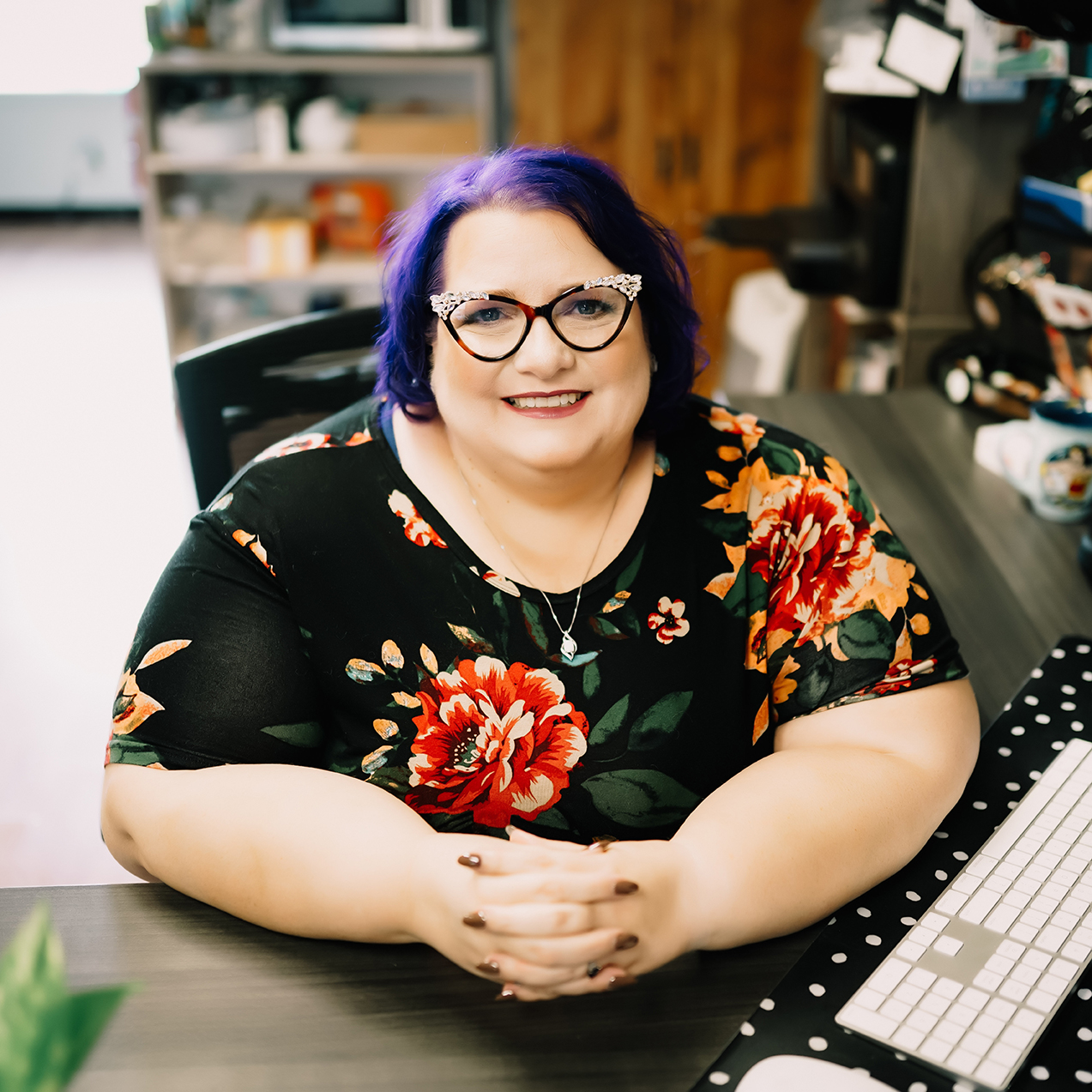
Michelle Frechette
Host
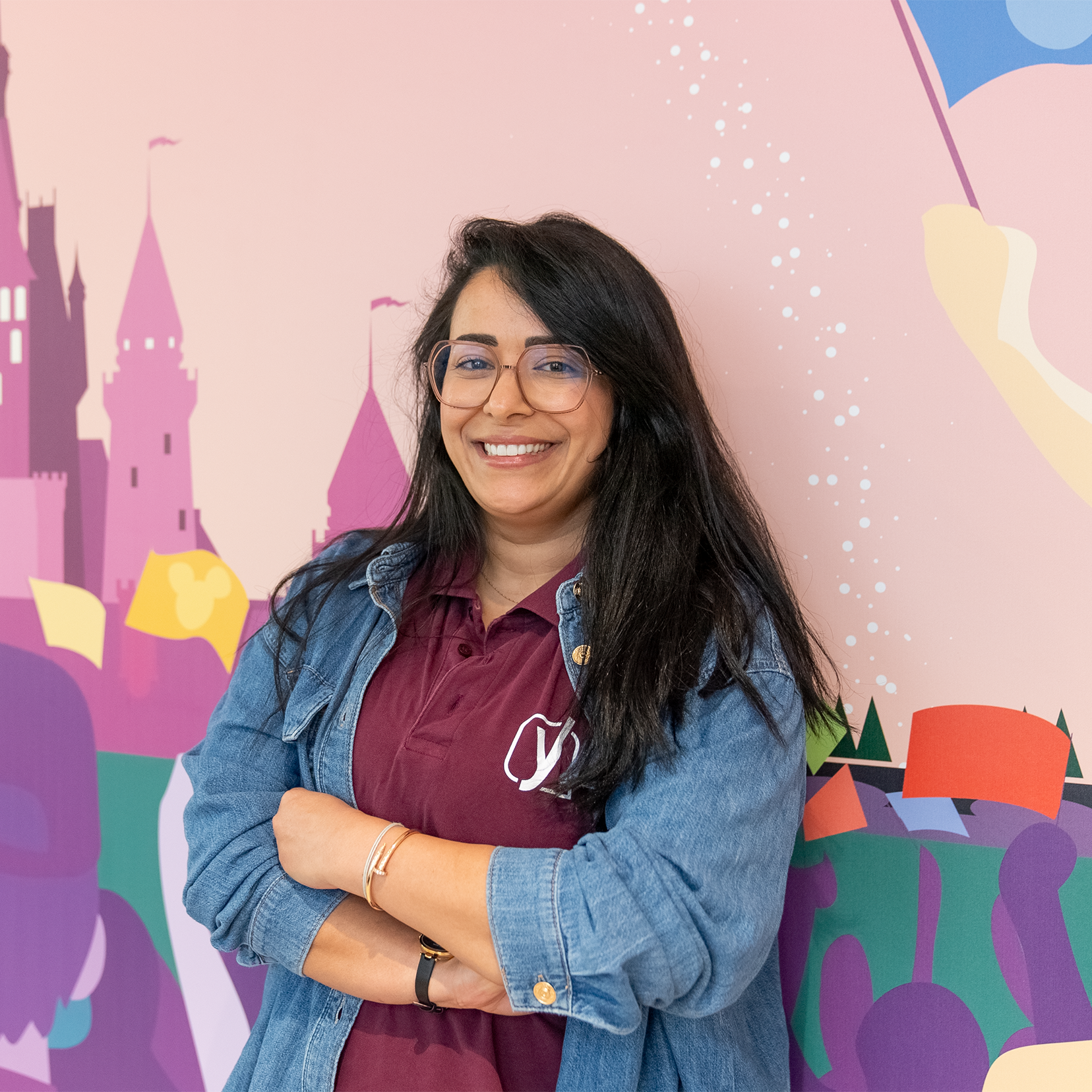
Samah Nasr
Host