
Show Notes
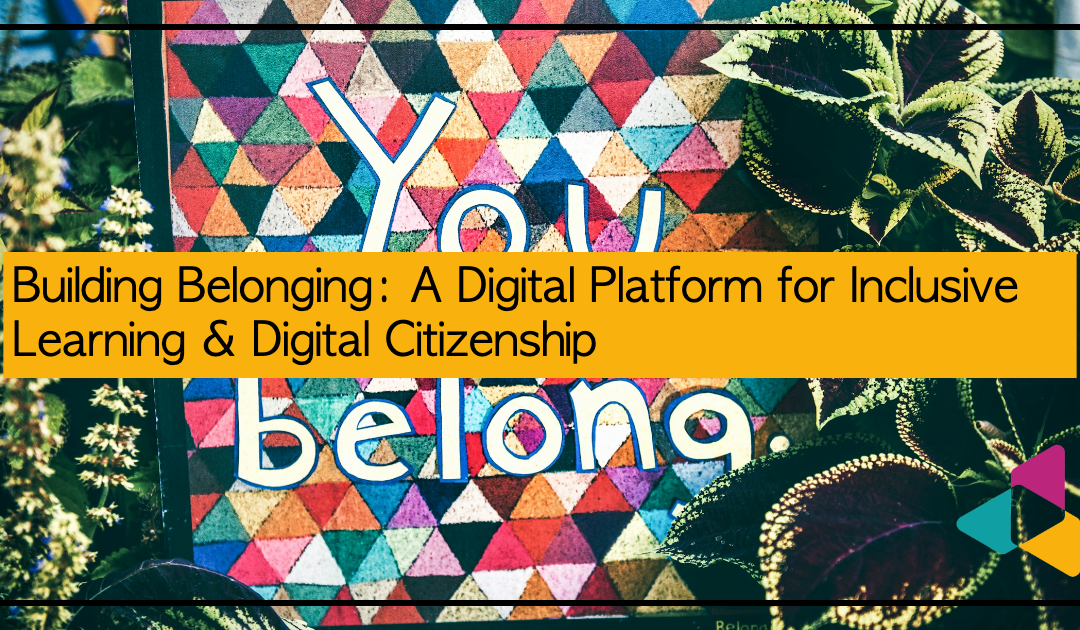
In our first episode of 2026, Michelle and Samah are joined by Dragana Babić and Sanja Hunyadi to explore a bold regional initiative: a digital platform designed to support children with learning disabilities and learning difficulties, along with the parents and educators who support them.
We talk about what sparked the project, why access to modern learning tools remains unequal across smaller communities, and how a volunteer-led team is building a “one place” hub for resources, communication, and collaboration, grounded in one core belief: we all belong together.
The conversation also expands into digital citizenship, media literacy, cybersecurity, and critical thinking, especially in an era of AI and misinformation. Dragana and Sanja share lessons from their work (including workshops for children with developmental disabilities and youth-led teaching moments) and how listeners can support inclusion locally and globally.
Episode Transcript
[00:00:00] Speaker A: Welcome to the Underrepresented in Tech podcast, where we talk about issues in underrepresentation and have difficult conversations.
Underrepresented in Tech is a free database with a goal of helping people find new opportunities in WordPress and tech.
Hello, Samah.
[00:00:20] Speaker B: Hello, Michelle. How are you?
[00:00:22] Speaker A: I am good. And this is our first podcast of 2026.
And I’m very excited because we are starting the conversation today with two wonderful guests, Dragana Babich and Sanja Hunyadi. I practiced. I practiced their name so that I wouldn’t butcher it.
And I met Dragana through Women Tech International. We struck up a conversation there, and she said, “Hey, I think I have something that would be great for your podcast.” And I was like, yes, we want to hear it, we want to talk about it. So they are doing something that’s pretty exciting to bring. Sorry, my cat’s jumping on me. Bringing together technology, education, inclusion, and social change through a regional digital platform that’s being developed for children with learning disabilities and learning difficulties. It’s a powerful initiative that shows how technology can be used not just to innovate, but to include.
That’s kind of exciting.
What do you have to add to that, Samah? I know that we’ve written down some notes. I’m not going to take all your glory.
[00:01:31] Speaker B: No. I’m really excited today to talk with Sanja and Dragana, and also to know about this amazing platform and what they’re doing, and also know that they also want to talk about digital citizenship education.
And this is really exciting me because I have a lot of questions about it, and also, of course, to talk about other critical thinking and media for young people. So I think not to make it longer, I’m gonna be gonna give the mic to Sanja and Dragana to introduce themselves for us.
[00:02:07] Speaker C: Yes.
[00:02:08] Speaker D: Would you like to go first?
[00:02:10] Speaker C: Yes. Hello. Thank you for the chance to start a new year with this wonderful podcast and actually to share some of our ideas, initiatives, and motivation that keep us going also in the next year and next year, as I hope today.
Actually, we want to just briefly introduce our platform that is not only for children and children with special needs, but also for their parents and educators, which will put in one place everybody that can contribute, contribute for better future, inclusion, and bigger dreams for all children. Not only for children that has or have access to knowledge in normal schools or normal ways, but also for children who are deprived in some ways socially or challenged.
So this platform should offer all parties access to information, to communication, and to start and to develop together the learning process, to exchange experience, to share knowledge actually and to be present in one place where they will feel they belong together.
What is one of the main feelings that we want to promote? That we all belong together.
[00:04:21] Speaker D: This is important.
[00:04:25] Speaker B: Amazing.
[00:04:27] Speaker A: Dragana, when you and I first talked, we talked about the fact that you are both centered in a very specific part of the world and that this technology you’re building is coming from women in that part of the world. Can you speak to that a little bit?
[00:04:40] Speaker B: Yes.
[00:04:41] Speaker D: I’m super, super grateful for you for this opportunity because I reached out to you and I didn’t believe like I was, I was thinking she there’s no way she’s going to respond, and you responded such quickly note yes, of course.
So I was kind of in a state of shock that you are actually willing, and that you are. I listened to your speech at the Women Tech Network Awards, I think, and then I see that you are not just talking to talk but walking the walk, and nice.
That is super, super important for me because I am like a woman tech network country leader, also an ambassador in a lot of international associations.
But I have to say, maybe it’s not such a positive note, but in Europe, especially, there are a lot of initiatives, podcasts, associations, and everything. But it’s not truly, I would say it’s women in tech nowadays are becoming like a buzzword much more than really adding value to the women in tech movement in general.
So I was super, super excited to have the opportunity to meet some women who are actually adding value to it. And I was forgetting what the question was.
[00:06:19] Speaker A: We talked about where you were located and how you have more difficulties perhaps as woman in tech.
[00:06:28] Speaker D: Well, yes, like I’m stationed in Banja Luka in Bosnia and Herzegovina, and just to say I’m the first like Google woman, techmaker, ambassador, and in all international networks I was like the first one, which was kind of shocking to me also.
And I would say just in a Balkan area that is the same situation, and I would say we don’t have so many opportunities, and on podcasts, on articles that I have the opportunity to contribute to, I’m always the first one. And actually, the first time it was exciting, but now it’s pretty boring.
But I want actually to be, you know, to see a woman like me in, in a, in a different international setting and not just to be alone. And also my colleague here at the Council of Europe conference, the closing conference on digital citizenship education, and I was kind of super excited about somebody from.
[00:07:37] Speaker C: My area.
[00:07:39] Speaker D: To have so I’m super, super flattered to be here with her.
[00:07:45] Speaker C: Of course I just and I’m based in Ljubljana, but I’m originally from Ban, and actually, my professional background is in media and journalism.
But in recent years, I’m also involved as a special advisor with the global youth and news media, where I promote digital citizenship and media literacy actually and critical thinking. And this is the area that we click together and now also find a way to cooperate with this platform and to add all these components together to elevate it on a higher level and to give it more perspectives. So one perspective is inclusion, one perspective is digital citizenship, and one perspective is media literacy. What is very important in today’s world and critical thinking, especially for young people, when technology is developing so fast and so rapidly, especially with AI, that we need to be adults, not only children, to update our critical thinking daily.
Because we can see that the let’s say, also the parents need some additional critical thinking education, also educators need that.
So we all have to actually work hard to be the let’s say critical thinkers, also technology, media, and to help us make better decisions in this fast-moving world.
[00:09:56] Speaker B: Yeah, amazing.
I agree with you. Like, I feel like I would love to see more women, and now we’re going back to. I feel like almost to step zero because now what’s happening in Europe, also in the states, around the world, we’re still fighting or we’re re-fighting for women again, right? For women’s equality. And I know sometimes Michelle and I talk about it before the shocking numbers, like everyone thinks that maybe the states or Canada have the best equality or gender equality or even for more women. And take a while now, it’s another country I know for Rwanda in Africa, has more women in parliament than any place around the world.
I want to move the conversation to the digital platform. First of all, I’m really impressed and really happy that you’re working on it. And I want to ask a question. I would love to know there was a specific moment, maybe a story, maybe a child that made you realize this platform had to exist?
[00:10:59] Speaker D: Yes, yes, of course. We collaborate with the Internet, with the organization in our community, and the president of that in informal conversation, tells us about cases in smaller cities in Bosnia Herzegovina and how children with difficult with disabilities are a kind of situation that is very, very shocking for us. We didn’t. We weren’t aware of the conditions that they don’t have any accessibility to.
To the major centers because of a lack of financial situation or etc. So when we figure out that there is actually some such a.
Such a large number of children in smaller communities in our country are in that position, which was kind of shocking to us. And she explained to us in a very detailed manner what that position is.
And we were kind of absolutely shocked that that is even possible in Europe today.
That some children and with the benefits of vast numbers of digital tools for learning. Because I’m a tech educator, I work with children, so I know what the vast possibilities are.
And I wasn’t aware till that point that they don’t have any digital tools for education in their cases, or there are some digital tools, but they are like 10 years ago or 15 years ago. There are.
What is the word? Like old tools. It’s not useful.
[00:12:51] Speaker B: Yeah, yeah, yeah.
[00:12:54] Speaker D: And also, we have some experience here.
From the Center for Neglect and Abuse of Children, where we see how they do not have access to digital tools. And because those associations are in the same yard, we were so in sh by the encounter with the children there. And we decided that has to change, like, period.
So this is the reason why we are developing the platform now.
[00:13:30] Speaker C: Yeah. And the platform actually targets educators because they are the main machine for bringing.
[00:13:39] Speaker D: And parents.
[00:13:40] Speaker C: And parents also, we want to make.
[00:13:42] Speaker D: Like, start at home.
So we are trying to do our best in our position. But I would say we may not have I will say funding or resources in this phase, but we have a good and strong will to do and we are going to, and we are going to do.
[00:14:06] Speaker C: And also, we have to be grateful for the team that we have. A team of experts that is voluntary.
[00:14:17] Speaker D: Only one man, I have to say.
And we are kind of like, oh, you are good to be here with all the women also.
[00:14:31] Speaker C: Yes. So they. They all work voluntarily and are developing this.
So it is important that we are lucky to have these good people in a team.
[00:14:49] Speaker D: Yes. I must say I’m super proud of our team. They are working constantly, like eight months on a volunteer basis.
So we are really, really trying to do our best to contribute. And I am super. I’m pretty sure that this is going to be.
I think that everybody is going to be surprised that this region, like the Balkan or Western Balkan region, could actually contribute at that level with that high-quality platform. I would say European context.
[00:15:28] Speaker C: Yes. Because it is rare that from this region, let’s say, when you are really limited with funds and Resources to innovate something that can benefit really globally.
That’s why we are also working hard to promote this idea.
[00:15:47] Speaker D: So thank you, girls, you are the.
[00:15:49] Speaker C: From one of.
[00:15:51] Speaker D: Yes, we are going to remember that.
[00:15:56] Speaker C: Because we really wanted this innovation and this lets invite of thinking and the feeling of belonging that we want to promote together with this goes to every child, to every educator, whenever needed.
So we really want to make a mission that we all have a right to be educated, to develop critical thinking, to make the best decisions, and to belong together and to create together.
[00:16:39] Speaker D: And also, I want to point out that this is a universal value. Like you understand all parts of the world understand what we are doing. Like we don’t have. It’s something that. It’s a universal value, and I think that is why it’s super important to promote. And as I say, you are girls, one of the first, remember that. And when we, when we are having so, so much success, then we are going to remember like Michelle.
[00:17:12] Speaker A: Well, we’re, we’re very honored to have hair for sure. But you touched on something that, I don’t know if this phrase exists in all languages, but in English we say think globally, act locally. And I think you are doing that very, very well.
And so you are specifically focusing on your region, and then it sounds like you have designs to move this into a global type situation. So, are you looking at making it multilingual? Is it something that?
Are you starting with one specific language? Are you starting with multiple? Can you give a little bit of an idea of how you’re going from local, regional, to you know, world domination?
[00:17:55] Speaker D: With the universal. Good, good.
[00:17:57] Speaker C: Yes, yes, of course, with the pilot project that will be in one language and then we will just, let’s say, multiply that in other languages. And also localized.
[00:18:11] Speaker D: Yes, localized for regions. Well, firstly and forely at the regional at the regional, regional level.
So, and then after that it’s going to be like European and then worldwide. We are hoping to do so because.
[00:18:34] Speaker C: Also, we want to add a little bit of design management thinking, design thinking in the whole process.
Why?
Because we want to start a small. Then we want to test it, test it. We want to get some feedbacks, improve it and goes to the next level and then multiply it and then again get some feedback because we firmly believe that each experience, each region, each country will have its own, let’s say contribution that will help to maybe elevate or to share something, some experience, some knowledge, something that can be also used in other regions, countries.
So that’s why we want to go with this design thinking approach firstly, so pilot a product project, then getting some feedbacks and improving it and giving it back, and so on. So this is the approach we want to consider for actually reaching as many children, as many educators, as many people as we can.
[00:20:00] Speaker B: In the age of misinformation. I know you talked about the digital citizenship and critical, let’s say thinking. In the age of this misinformation algorithm and social media pressure, what skills do young people most urgently need? And how can educators, parents, or platforms help children become more critical users of technology rather than passive consumers?
[00:20:28] Speaker C: Yes, first it’s.
Everything starts at home.
We also. That’s why I want to be on this platform to reach parents, then.
[00:20:45] Speaker B: Is in.
[00:20:45] Speaker C: School, where children actually spend a lot of time. And also in schools, it is important that they are coming back not only from school with the new information, with the new, let’s say, knowledge, but also with some critical thinking skills that they can actually develop their own opinion about something and to be, let’s say, thought how to develop.
Yes, this is true. This is not true.
Shall I. I should check it twice. I should check it, maybe with my parents. I should check it, maybe in, let’s say, some other resources, information that I’m getting.
Also, when they are online, they should have the same approach. So let’s.
They are, let’s say, peers, or someone tells them something that they actually have this approach. Okay, let me check it.
I don’t believe it.
If it doesn’t feel like. Like true.
It doesn’t seem to be, let’s say, genuine. Let me check, let me check it with my parents, Let me check it with my teachers. Let me check it with the other resources so we can.
So that they can actually be able to make their own opinion and develop this critical way of thinking, so they can trust firstly themselves, not the AI, not the teachers per se, not educators per se. But let. Let’s have my own opinion and my own experience information in this digital age.
[00:22:55] Speaker B: Amazing.
[00:22:56] Speaker A: It is amazing. So you recently presented your work and the resources at the Council of Europe Forum in Strasbourg.
That had to be very exciting for you. So we want to know, like, what was the key message that you wanted to bring to that audience, and what kind of contribution did you receive from them?
[00:23:13] Speaker D: Well, the key message from STAS is, as I was saying already, the universal value is everywhere the same.
So as you say, develop locally, act globally. And this is exactly what happens at the European Council of Europe Forum in Strasbourg. We have some. Three workshops, two workshops, and actually one article.
And this was like a community-based initiative. I was not thinking that there was anything special at the moment. And I must say they will completely volunteer.
[00:24:02] Speaker C: LED.
[00:24:03] Speaker D: So we held a cybersecurity workshop, which Sanja was talking about. About the thinking. I would say from it perspective cyber cybersecurity is like workshops with this critical thinking. And we held cybersecurity workshops for children with developmental disability because there were none. Actually, they never have cybersecurity education whatsoever.
And we heard some stories, as I was told by the president of the association, that was so.
I don’t know what. What term in English should I use? It was a.
I would say horrendous thing on the Internet because you don’t have any education about cybersecurity.
And then we find out about that. And we conducted this workshop. And the funny part was that the teachers were actually young.
It was youth for youth with disabilities. And the teacher was chill. Was a girl with disability. Oh, that’s cool.
[00:25:17] Speaker B: That’s impressive. Yeah.
[00:25:18] Speaker D: Yes. We put her in a position to be a leader, a teacher, and confident.
And one moment was very.
I would say, I don’t know, it was very emotional. Emotional. I was telling her how the teacher is standing because she was like that with the youth all the.
The rest of the youth were very confident. They were like We are teachers. And they were like. But she was like.
Like that.
[00:25:53] Speaker B: Yes.
[00:25:53] Speaker D: And she was standing next to them like this. And I was telling her how the teacher is standing, how the teacher is standing.
[00:26:00] Speaker C: And I’m telling her to be empowering.
[00:26:02] Speaker B: It.
[00:26:05] Speaker D: To be a teacher. Like you’re a teacher, you are a role model. That was like the specific something that I really remember.
That was one workshop and the. The other one was with. With a center for neglected and abused children. We conduct a series of AI workshops there. So we kind of blend the new tendency with that environment. And that was like really unusual to do.
And it was kind of the result of those workshops that one boy. Because we.
The. The workshops are held and implemented in this way. Because it’s a short period of time. We don’t have like for technical knowledge. There is no time, actually.
So we want to spark an interest.
Like to spark an interest that it is. So we present the AI like this is super exciting, like fun, very interactive. They see themselves on the screen.
[00:27:11] Speaker C: They will.
[00:27:12] Speaker D: They were creative. And because of that, one boy from that cent came to a regular IT education.
So we have a real effect. And when you see it’s a short period of time, we don’t have enough resources to conduct. So it’s great. We were super, super, super excited that we could motivate him to get to it. And now he is an IT expert. She is a learning titan and very excited about that. So these were the resources that we presented at Strasbourg. It was a very honor to be an educator from Bosnia and Herzegovina to, you know, present resources there.
And we just show, as we are trying with the digital platform, that we also could add value, but real value to the European context at that time, and to set an example and good practices from regions like this. Well, breaking the stereotype, I will say absolutely.
[00:28:30] Speaker A: We only have a couple of minutes left. So what I want to ask you is what your goals are for the future?
It’s wonderful to share the information, but what can audiences that listen to you and learn about this do to help you move things forward?
[00:28:52] Speaker C: A lot of big questions.
This is a good question, actually.
First, they can all come to.
[00:29:05] Speaker A: Be.
[00:29:05] Speaker C: Active in their own environment first and to do what they can to, let’s say, promote the values that we have that we emphasized in this podcast.
Everybody can contribute on their way to children, especially for children with special needs, to help them learn something, to help them improve at any level.
It can be like, I don’t know, teach them how to use, let’s say a phone or how to use an iPad or how to use, I don’t know, any tool that can help them become more, let’s say, aware of the digital world with their digital literacy. Because we are living in a world where technology is evolving very fast. If you don’t, if you want to stop, technology will not stop. It will.
And we really need to be digitally literate every day.
[00:30:31] Speaker D: Nobody should be left beside and.
[00:30:35] Speaker C: Everybody should be left behind, and everybody should feel like what everybody can do actually is to give them the feeling of belonging that they are.
[00:30:50] Speaker D: Equally.
[00:30:53] Speaker C: Let’s say or have a right to have equal opportunity as anybody else, especially in dealing with digital tools with AI, and also to teach them to be critical, that AI isn’t just a tool.
It’s not your, it’s not an assistant, it’s not a friend, it’s not anything that can, let’s say, compensate with some true human being. But it is a tool, and it is important to develop this critical thinking from an early age.
Both children, parents, children with special needs, and everybody who can actually be misled by the narrative that AI can use to make us believe it is more than just technology.
[00:32:06] Speaker B: I agree with you also, the AI tools are not they are not telling the truth. They are biased. There’s. There are many things that do not come from the AI. It’s 100% sense truth. Also, sometimes give information, also if you ask them about the race with the other race, it’s. Yeah.
Ladies, thank you, Sonia. Thank you, Dragana, for the inspiring and deeply meaningful conversation. And I know we can go talk for hours and hours about it.
Your work reminds us and everyone that technology is not just about code, it’s about people, dignity, access, and opportunity. Yes. If I want to say also, if people want to reach out to you, if people want to contact you, how can they do that, where can they find you?
[00:32:54] Speaker D: Through our LinkedIn and profiles.
[00:32:58] Speaker C: Yes, we are.
We are on LinkedIn, both of us, and they can.
[00:33:03] Speaker D: I’m also in a lot of international associations, women, tech networks. She can code. So they can contact me also there.
[00:33:12] Speaker B: Yeah, yeah, definitely. Okay. I will share your linked profile and our subscription or description of our. The podcast. And then that’s also people, if they listen and they want to reach out to you, they want to talk to you, of course, they can do that. And we also, when we share the social post, we will tag you there. So.
[00:33:32] Speaker A: Absolutely. Thank you so much for being here.
Next week, Sabah and I are going to talk about an initiative that we are undertaking for the first time this year. I’m going to tease it out a little bit, Samah, which is that we are going to hold a live event on International Women’s Day this year. So we’re going to be talking a little bit about that next week and what we’re hoping to accomplish, and how our listeners and women can contribute to that as well. So we’re really looking forward to that. So, Dragana, Sonia, thank you so much for being here with us today. Thank you.
Yes. And Samah, I will see you. See you next week for sure.
Yeah. And as we always say, if you’re. If our wonderful listeners have questions, please reach out to us. If you want to be connected, we could do that for you as well. And if you have questions or ideas for future podcasts like Dragana did, please reach out to us. We love having wonderful guests like these two wonderful women today. So thank you, everybody. We will see you next time.
[00:34:36] Speaker B: Thank you. And Dragana, I will. We will publish the podcast on Friday. We will reach out to you and share the link and our social post with you. Absolutely.
[00:34:47] Speaker D: Thank you very much, girl.
[00:34:48] Speaker A: Thank you, everybody. Thank you.
[00:34:50] Speaker B: Bye.
[00:34:51] Speaker C: Nice meeting you, and good luck with your initiative. Really.
Thank you.
[00:34:58] Speaker B: That.
Michelle Frechette
Host
Samah Nasr
Host