
Show Notes
In this Black History Month episode of Underrepresented in Tech, Michelle and Samah highlight 22 Black leaders and innovators whose work shaped modern technology from early telecommunications and spaceflight calculations to computer science breakthroughs and responsible AI.
Then, they unpack key takeaways from a Forbes article on the challenges underrepresented groups still face in tech, including biased hiring, limited access, gaps in mentorship and networks, accessibility barriers, and non-inclusive workplace cultures, along with practical ways companies and communities can help close those gaps.
Episode Transcript
[00:00:00] Speaker A: Welcome to the Underrepresented in Tech podcast, where we talk about issues in underrepresentation and have difficult conversations.
Underrepresented in Tech is a free database with the goal of helping people find new opportunities in WordPress and tech.
Hello, Samah.
[00:00:18] Speaker B: Hello, Michelle.
[00:00:20] Speaker A: It’s another beautiful week when I get to see your beautiful face on a Monday. Thank you for joining me. As always, my co-hostess with the mostest.
Thank you.
[00:00:30] Speaker B: Same here. And again, we’re wearing the same color, and we didn’t plan for it. We didn’t!
[00:00:36] Speaker A: No. And we both picked it last night, which is even funnier. So, yeah—if you’re listening and not watching, we’re both in maroon-colored shirts today. And this is not the first time we’ve coordinated accidentally, so it’s almost like we have a dress code or something—but we don’t.
[00:00:51] Speaker B: We can—we can do that, by the way.
[00:00:53] Speaker A: I know. Maybe we should do that next time. I’ll call you later: What are you gonna wear Monday?
But it is Monday. We didn’t record last week—life just got away from us. And we’ve got a new recording time now, which hopefully will make it a lot easier for us to continue to move forward every week. So thank you for your patience when we do skip a week.
But it is Black History Month, so we’re starting on the second week of the month to highlight some Black tech inventors and people in technology over the past. And so, today’s episode we’re going to talk through… I can’t remember how many are on the list.
[00:01:26] Speaker B: I think around 22.
[00:01:29] Speaker A: 22. All right, so we’re going to talk quickly through 22 Black inventors—tech leaders, I should say. Black leaders in tech you should know is what the article is called. And then we’re going to switch over to a Forbes article that talks about challenges for underrepresented groups and how to solve them. So this might be a little bit longer of an episode, but 100% it is going to be worth listening to. So we’re going to just divvy it up. We’re going to talk—we’re not going to talk so fast that you can’t understand us. I know I’m probably already there, but I get so excited.
So we’ll just go back and forth, and we’re going to first talk about some of these leaders in tech. We did this last year—I think it was for women in tech, and maybe also for Black people in tech. And I just really like highlighting the fact that when we talk about the challenges afterwards, you’ll see some of the things that these people overcame in their lifetimes, and some of them are really early on. So you can imagine the challenges were even greater back then.
But the challenges that they overcame, and how we tend to, as a society in general, overlook underrepresented people—I mean, that’s the whole purpose of our podcast. We’ve talked about that.
I won’t say “to death” because it’s still around, right? But we talk about that a lot, and that’s why we’re here.
But there are ways that we, as a society, and we, as leaders in technology, can make the way easier for underrepresented groups, including our Black contributors in technology. So, without further ado, I’m going to start with the first one. So the first person is Granville Woods. He died in 1910.
He was a great inventor, specifically known for his 15 different appliances for the electric railways—gosh, my mouth’s not working. He was most known for inventing the multiplex induction telegraph, which allowed for voice communications through telegraph wires. Kind of like the first phone, in a way, right? The device ended up preventing many train accidents. He became known as the Black Edison because Thomas Edison tried to sue him after he invented the multiplex telegraph. The lawsuit failed, so Edison tried to make Woods a partner. He refused and held onto nearly 60 patents at the time of his death. Pretty impressive. Yeah.
[00:03:51] Speaker B: The second one—and let me start: I apologize if I butcher anybody’s names, especially Katherine Johnson. She passed in 2020.
The accomplishments of Katherine were highlighted in the film Hidden Figures. But for those who don’t know, she was a pioneering Black woman in tech. She entered college when she was only 15 years old, and at the time of graduation, her only employment options were teaching or nursing. So she worked as a teacher before she applied for a job at the Langley Research Center, which would later become part of NASA. In 1953, Johnson began working as a human computer and calculated the flight path for the first NASA mission to space. Her calculations were essential to the success of many early missions, like Project Mercury and Apollo 11. She also helped confirm the accuracy when machine computers were brought in. In 2015, she was awarded the Presidential Medal of Freedom by President Obama.
[00:04:58] Speaker A: And if you haven’t seen the movie Hidden Figures, you should absolutely watch it. It’s so amazing.
She was quite a pioneer, and she only died very recently.
Otis Boykin passed in 1982. He was another prolific inventor, eventually holding 26 patents. After graduating from Fisk College in 1941, he worked with the Majestic Radio and TV Corporation, and eventually the P.J. Nilsson Research Laboratories. Among his inventions were a wire precision resistor used in televisions, radios, IBM computers, and even military missiles. He also invented a control unit for the pacemaker. He helped improve and make everyday electronics more efficient and affordable.
[00:05:42] Speaker B: The next one is Evelyn Boyd Granville. She passed in 2023. In 1949, she became the second African American woman ever to earn a PhD in mathematics from Yale.
Yeah—and not just any Yale. Exactly. After working in D.C., using math to help develop missile fuses, Granville took on a role at IBM in 1956. This launched her career at NASA, where she was an instrumental part of the Project Mercury missions, designing computer software that helped analyze satellite orbits. She also worked on the Apollo program in 1962 before returning to IBM as a senior mathematician.
Amazing.
[00:06:30] Speaker A: Amazing. Totally amazing. Melba Roy Mouton passed in 1990. She was another notable human computer, which is what they called the women and the people who were doing all of the calculations, right? She was a human computer at NASA. She rose through the ranks to head of computer programming at NASA, and later the program production section at Goddard Space Flight Center. Her work helped produce the orbital element timetables, which allowed millions to see the satellite from Earth as it passed overhead. She received an Apollo Achievement Award and an Exceptional Performance Award while at NASA. It’s really interesting to note that when she began working at NASA in her career, there was still segregation. So she was using separate coffee, separate toilets, separate everything.
So she had those additional challenges.
[00:07:15] Speaker B: Yeah. Next one is Roy Clay Sr. He passed away in 2024. Roy Clay Sr. is often referred to as the Godfather of Silicon Valley. After graduating from Saint Louis University, where he was one of the first Black men to attend, he started working in computer programming. He worked on writing software that demonstrated the spread of radiation after an atomic explosion.
In the ’70s, Clay worked as a computer consultant in Silicon Valley and became a key figure in the development of HP’s computer division. He would eventually lead the team that engineered HP’s entrance into the computer market. In 2003, he was inducted into the Silicon Valley Engineering Council Hall of Fame.
[00:08:06] Speaker A: Hall of Fame—wow.
Annie J. Easley, who passed in 2011, began her career as one of only four Black employees out of 2,500 at the National Advisory Committee for Aeronautics, which was NACA—the precursor to NASA. So she started as a human computer. But when the real machine computers came out, she dove into learning assembly language and Fortran. She became a computer programmer working on a variety of projects. But her most famous work was on the Centaur rocket, a first-of-its-kind rocket that used a unique fuel system.
[00:08:41] Speaker B: I’m a little bit jealous of the people I know.
[00:08:44] Speaker A: What have I done with my life, right? Yeah.
[00:08:47] Speaker B: Okay, next one is Frank Greene. He passed away in 2009.
He is often held as one of the first Black technologists. He developed high-speed semiconductor memory systems in the ’60s at Fairchild Semiconductor R&D labs. He would later go on to start two technology companies of his own. Wow. He also founded a VC firm called New Vista Capital, which focused on minority- and female-led companies. His legacy as a technologist and as an investor lives on today.
And he’s also among 63 inductees in the Silicon Valley Engineers Council Hall of Fame. Impressive. And also, it’s not only that he was one of the first Black technologists, but he also helped others from the Black community shine and lead companies. Impressive.
[00:09:49] Speaker A: Pretty awesome. Yeah. Valerie Thomas, who is still alive—born in ’43. She had a strong interest in technology early on but didn’t receive support for it until she attended Morgan State University. She was one of only two women in her class to major in physics. She excelled at school and landed a job as a mathematical data analyst for NASA. She worked at NASA from ’64 to ’95, conducting large-scale experiments and developing computer data systems. She is best known for inventing the illusion transmitter, a technology that laid the groundwork for modern 3D imaging used in medicine, entertainment, and virtual reality.
[00:10:25] Speaker B: Wow.
[00:10:26] Speaker A: Very cool.
[00:10:28] Speaker B: Clarence “Skip” Ellis passed away in 2004.
Clarence became the first Black person to earn a PhD in computer science. He earned this degree from the University of Illinois at Urbana-Champaign in 1969. As a student, he worked on hardware and software in the development of the ILLIAC IV supercomputer. He had a long career at major tech companies like Bell Telephone Laboratories, IBM, Xerox—
[00:11:04] Speaker A: Sorry—Xerox.
[00:11:06] Speaker B: Xerox, yeah—and more. At the Palo Alto Research Center, he spearheaded a group that invented OfficeTalk, the first office system to use icons and Ethernet to allow people to collaborate from a distance. Ellis was a pioneer in the field of operational transformation, examining the functionality of collaborative systems, which is found in computer applications today—like Google Docs and—
[00:11:37] Speaker A: Sounds like Slack too, right?
[00:11:39] Speaker B: Yeah, yeah.
[00:11:41] Speaker A: Dr. Shirley Jackson, born in ’46—still alive. A theoretical physicist, she was the first Black woman to earn a doctorate degree at MIT, and hers was in nuclear physics. Her work paved the way for major technological innovations in telecommunications. We can thank her for innovations that led to the touch-tone telephone, caller ID, call waiting, and fiber-optic cable. She’s received many fellowships, honors, and awards, including the National Medal of Science, and was nominated by President Barack Obama to be a member of the President’s Intelligence Advisory Board.
[00:12:18] Speaker B: Wow.
Next one: John W. Thompson.
He was born in 1949 and he’s still alive—thank God.
Let them share their knowledge more and more.
[00:12:29] Speaker A: Yeah.
[00:12:31] Speaker B: An impressive career in tech. He began as a salesperson at IBM and climbed up the company to become the General Manager of IBM Americas. He also served as the CEO of Virtual Instruments, CEO of Symantec, and Chairman of Microsoft until 2021. Today, he serves on the board of directors of the Silicon Valley Community Foundation.
[00:12:53] Speaker A: These people are so freaking impressive.
[00:12:55] Speaker B: Yeah.
[00:12:56] Speaker A: Next is Mark Reggis Hanna, born in ’56—still alive. For the graphics in Jurassic Park, Aladdin, Beauty and the Beast, and more, we have Chicago native Mark Hanna to thank. He was an electrical engineer and computer graphics designer in the ’80s and ’90s. In 1982, he co-founded Silicon Graphics Incorporated, eventually becoming the company’s principal scientist. His computer graphics technology has been used in major motion films, as well as commercials, the intro for Monday Night Football, and by George Lucas’s visual effects studio Industrial Light & Magic.
[00:13:31] Speaker B: Next one is David L. Stewart, born in 1951, and he’s still alive. David is the founder and chairman of Worldwide Technology, one of the largest Black-owned companies in the United States. In the ’90s, he co-founded WWT, growing into a global systems integrator that supports enterprise IT, cloud computing, cybersecurity, and telecommunications for Fortune 500 companies and government agencies. Under Stewart’s leadership, WWT has become a major force in digital infrastructure while maintaining a strong commitment to workforce development and community investment.
[00:14:16] Speaker A: I’m glad you had to do the WWT, because that’s hard to say very much.
The next one is Dr. Mark Dean, still alive—born in 1957. He’s an influential Black tech leader and a prominent figure in computer science. Early on, he had an interest and a gift in technology, building his own computer, radio, and amplifier when he was in high school. He began working at IBM in 1980, where he was an essential leader in developing the personal computer. He holds three of IBM’s original nine patents for the PC. More recently, he led the team that produced the 1 GHz chip. He was the first Black engineer named an IBM Fellow, the company’s highest technical honor, and continues to shape the future of computing through research and education.
Wow.
[00:15:02] Speaker B: Next one: John Henry Thompson. From 1959 until now, he is a technologist whose work sits at the intersection of early computing and modern digital media. Trained in both computer science and visual arts, Thompson helped shape how people interact with technology beyond text and code. He is the inventor of Lingo, a scripting language that renders visuals in computer language. Many programs that use graphics, animation, sound, and video for interactive simulation still use Lingo today.
It’s also being used to create programs that are now used in video games, web design, animation, and graphics.
[00:15:48] Speaker A: Very cool. Stacy Brown Philpott, from 1965 to present, is a technology executive and venture capitalist focused on scaling companies through operational excellence. As former CEO of TaskRabbit—oh, that’s cool—she led the company’s global expansion and its ultimate acquisition by IKEA in 2017.
Building on that experience, Brown Philpott founded Cherry Rock Capital, a venture firm dedicated to helping Black and Latina founders grow from early traction to sustainable scalability. Her work emphasizes leadership development, operational rigor, and building companies designed to last. I like when they also start to give back like that—building these VC firms. Pretty cool.
[00:16:32] Speaker B: Yeah. Kimberly Bryant, from 1967 until now—Kimberly Bryant is an engineer and social entrepreneur.
As the founder of Black Girls Code, a nonprofit dedicated to expanding access to technology education for Black girls. After working in biotechnology at companies like Genentech, Novartis, and Merck, Bryant recognized the stark lack of representation in technical fields and set out to change it.
Since its founding in 2011, Black Girls Code has introduced tens of thousands of students to coding, robotics, and computer science, helping build a more inclusive pipeline of future tech talent. Wow, this is really impressive.
[00:17:26] Speaker A: And this next person was born after me, so we’re getting much more current here.
Lisa Gevelber, from 1971 to now, is a computer scientist and internet pioneer whose work helped shape how we experience media online today. She played a key role in the development of Shockwave, an early technology that enabled animation and interactivity on the web. Gevelber also contributed to the evolution of online streaming as part of the senior leadership team that launched Hulu. I use Hulu all the time. From tech, Gevelber transitioned to policy, serving as the Chief Digital Service Officer for the Department of Education.
Today she is the founder and CEO of TechWitable, a platform that helps companies create a safe, inclusive, and equitable workplace. Wow. Hats off to her.
[00:18:14] Speaker B: The next name I’m gonna butcher, so I really apologize, is Phaedra Ellis-Lamkins. From 1976 until present, she is a technology leader focused on modernizing essential public systems. In her early career, she served as the CEO of Green For All, where she worked to reduce energy costs and expand clean energy job opportunities for low-income communities. Today she serves as the co-founder and CEO of Promise, a technology company that emphasizes ethical AI, data privacy, and accessibility for underserved populations, and partners with governments and utilities to digitize payment systems, compliance monitoring, and service access for millions. Wow.
[00:19:04] Speaker A: This is—wow. Digital payment systems I also use all the time because I’m an online shopper.
Tope Awotona, 1981 to present. Tope was the founder and CEO of Calendly, which I still use—the scheduling platform used by millions of professionals worldwide. After immigrating to the U.S. from Nigeria, Awotona bootstrapped Calendly with a focus on simplicity, usability, and real-world productivity needs. The company grew into a billion-dollar business by solving a universal workplace friction point: finding the time to meet. In recognition of his impact on technology, entrepreneurship, and job creation, Awotona was the sole annual 2024 inductee into the Technology Hall of Fame of Georgia, as presented by the Technology Association of Georgia.
[00:19:55] Speaker B: The last one is Timnit Gebru, from 1982 until now. She is a computer scientist and a leading voice in artificial intelligence ethics. She is the founder of the Distributed AI Research Institute (DAIR) and a co-founder of Black in AI, advocating for accountability, transparency, and representation in AI research.
Gebru’s work in algorithmic bias, data governance, and power in technology has shaped global conversations about responsible AI and influenced how organizations approach emerging technologies.
[00:20:37] Speaker A: And this article was from Purpose Jobs, “Celebrating Black History: Black Leaders in Tech.” We will include the link for that in the show notes.
So let’s move on to, like, when we reflect back over—that’s a pretty impressive list of 22 people. Some of the things I like about it is it isn’t your typical list of Black—it’s not like we’re looking at, you know, Eli Whitney again. We’re not looking at people that we should celebrate—absolutely, 100%. But we’re expanding that list to say: look at not only the people that made technology before any of us were even a twinkle in our great-grandfather’s eyes, kind of thing, that created and contributed to much of the technology that we all—you and I and everybody listening to this podcast—use on a daily basis. I think that’s so impressive.
[00:21:30] Speaker B: I agree with you. And also, celebrating those amazing people—everyone, and especially Black History—remains really especially important in the current context of the United States, where conversations around racial equity, representation, and social justice continue to evolve, and there is still continued struggle—continued fight—for equity, equality, for voting rights, for your rights, for better education, and for diversity and inclusiveness at work.
[00:22:01] Speaker A: So yeah, absolutely.
So, super cool. Absolutely.
So Forbes has an article that was written in 2024 and still very relevant: “Challenges for underrepresented groups in tech and how to solve them.” So why don’t I just read them off really quickly, and you and I can kind of discuss them also very quickly. There are 20 of them, so let’s talk a little bit about some of them, and maybe less or more about others. But the first thing on the list today is an existing absence of diversity.
So it says: apart from limited access to tech education, underrepresented groups often face an existing lack of diversity and inclusion in tech-related companies that already exist.
And it says here that businesses need to implement inclusive hiring practices and provide training for their employees to address unconscious bias—and I would say also conscious bias—and ensure a more welcoming workplace.
I think it’s really hard when you are trying to recruit good people, and maybe you have diversity in mind too, and you don’t have any diverse people in your company already. So, I mean, obviously you can’t solve the problem of the fact that there may not be much diversity now, but you can work to bring diverse people in and make your— we talk about the fact that having a diverse employee environment makes for better product and better services all around because you’re incorporating more voices and more points of view. Any thoughts on that?
[00:23:30] Speaker B: Yeah, for me, also—like, I know I’m 99% sure the United Nations is one of the organizations that really makes it very amazing when they do hiring. When they hire for a position, they say, “We encourage,” for example, people from this ethnicity to apply for this current job or this position. I think that also—companies can ask for specific diversity, and I don’t mean like we need to have, like, you need to have a Black person, a Muslim, a woman, a man, someone from a community. But, for example, let’s be honest: if you have a company and the majority—90%—of them is white, you can also ask a different ethnicity to apply for the job. I know 99% the UN is really doing this policy. They encourage specific ethnicities to apply.
And I think some— a lot of companies are doing it. If you don’t have diversity, you can also just check out your hiring process: who’s doing the recruitment, how you’re looking at the applications, and where also you’re sharing them. Like, to be honest, we’re not gonna name places, but some places in some specific states—or just like also some places—like, you know, the majority are not maybe diverse, but also you need to check where you can do that.
[00:24:53] Speaker A: Yeah, absolutely.
[00:24:54] Speaker B: Yeah.
[00:24:54] Speaker A: The next one is a lack of accessibility tools for those who are disabled. And there are disabled people in every underrepresented population, right? So it’s still an issue in the tech industry. I was talking on a podcast earlier today about how I still have my meetup online because I have disability needs that I can’t solve to have them someplace else without somebody who would be willing to help me. So I’m a very independent person and I accomplish a lot, but I still run up against things that are difficult for me to accomplish. So they’re difficult for other people as well. So, for example, being able to use tools such as Zoom to give and review presentations. Artificial intelligence can be transformative for employees with disabilities, such as developers who are blind or visually impaired, by removing barriers to sharing information and empowering them to execute tasks more efficiently. I love the idea of looking into ways that AI can assist with disabilities, as opposed to AI doesn’t have to be like, “Oh, it’s taking all our jobs.”
It can be incredibly helpful if we’re using it right and we’re developing it properly.
[00:26:01] Speaker B: And also, for me, we talked a couple of times. I remember we had one guest talking about accessibility apps and stuff. It’s so amazing. Like, in the Netherlands, where I live now—I’m not in Congo anymore, which is—
It’s so accessible with the bus and the train and everywhere.
But when I go abroad, I look at it like: I found that it’s so—everyone should do it. Why are other people not doing it? Like, when you look at places, it’s not only about public transportation—yes. Also, I’m really happy now with technology: you have Zoom, you have Teams, you have whatever. And it’s not only a little bit help for people, but still companies— they still prefer that you need to be physically there, which sometimes can cause a lot of issues for people with disabilities. Then it’s not going to be pleasant.
[00:26:54] Speaker A: So yeah, absolutely.
The next one is strict expertise and educational preferences. Tech has a very narrow definition of what we call the “best engineer”—what that looks like on paper. Credentials alone don’t make great people. Grit, intellectual curiosity, and the desire to find great solutions to problems do. There are so many people who are amazing at their jobs who never had an education in those fields.
I’m one of those people, right? Like, nobody taught me how to do what I do. Nobody taught me WordPress—I figured it out on my own. Nobody taught me how to be a community person—those things kind of come naturally. And if I didn’t have the experience, I learned them on the job. So you have to give other people opportunities. If they have the determination, curiosity, and the grit to be able to do those things, then we need to be able to look beyond just the technical expertise and realize that some of those things will come with the job. And we can’t just expect everybody to come from an Ivy League.
But we need to foster diversity of people and ideas—people who are hungry for the information and learning.
[00:27:50] Speaker B: I agree with you 100%. Sometimes experience has more added value than studying at an amazing university. Sometimes you learn on the job better than you learn in the university or in your master’s degree.
[00:28:03] Speaker A: Yeah, exactly. My undergrad’s in religion and philosophy. It does not have anything to do with what I do currently in my life.
[00:28:10] Speaker B: You’re a wise person.
[00:28:12] Speaker A: That degree taught me how to think, and that has brought me further. But, you know, I don’t open every meeting with prayer. So I’m just gonna say that.
There’s also an underexposure to technical career options.
So to help break the barrier, we participate—this company is talking about how this person participates in high school job fairs and internship programs, because internships are probably the most useful tool, as they provide participants with experience they can use later, as well as showing them possibilities they might otherwise have never considered. So that’s another opportunity for learning on the job, right? To bring people in through internship and mentorship possibilities.
Unnecessary entry-level requirements—this kind of echoes that one earlier—but asking people to have specific requirements that aren’t really necessary, such as a four-year degree, multi-year experience, certifications, and so on. Many skills can be learned quickly. Have you seen, in the past, like people will post the job and it’s like you have to have five-plus years in whatever this programming language is, but the programming language has only been out for two years? Like, how can anybody do that, right? So, yeah. So think carefully about what you’re asking people to do.
The next one is limited resources for skills development and networking. One challenge underrepresented groups face in pursuing careers in technology is a lack of access to resources and opportunities for skills development and networking. The tech industry can contribute to solving this issue by making training and education available for free, creating networking events, including job fairs, and extending internships specifically to underrepresented groups. So we’re seeing some of the same ideas reiterated for solving different problems.
Moving on: a lack of progress on gender gaps. So less than 30% of the tech industry is composed of women, and that percentage is even lower in C-suite roles. The tech industry should implement policies for all tech companies to have at least 45% female representation on their workforces, up to and including the board level. Mentorship should be established in tech companies to direct women on their career paths. That’s what WP Includes Me—thank you—is trying to do: to help give women some mentoring to be able to climb the ladder in technology. Anything that you would add to that?
[00:30:32] Speaker B: For me, I agree. And also, most of the time, women get paid less. We have the barrier—like, we’re not going to talk about whether you have kids or not. This is a new, different level of shame because that’s also women we need.
[00:30:46] Speaker A: Right.
[00:30:47] Speaker B: But also, if you have kids—the daycare, your life between being a mom and working as a woman. And also, most of the time—to be honest—white men get more promotions faster than white women even. Let’s not even talk about different races. And most of the time, white women get higher promotions than different-colored women. Yeah. I hope one day, maybe in the next five years, this thing will be a little bit—
[00:31:16] Speaker A: Solved—or close that gap some more. Yeah, absolutely.
[00:31:21] Speaker B: Yeah.
[00:31:21] Speaker A: And to think about it—groceries cost the same for everybody. So why are we paying— you know, rent is the same for everybody. Men aren’t getting a break on the same apartment that a woman’s looking at. So, like, what if we’re paying— I mean, women aren’t getting a break. So if we’re paying the same amount for rent and utilities and groceries, why are we paying men more for the same job?
[00:31:41] Speaker B: Because they think all the time that women should be with a man, and the man is the breadwinner.
[00:31:47] Speaker A: Right. But that’s no longer true. Right. That’s just not the way the world works now. Yeah.
[00:31:52] Speaker B: Yeah.
[00:31:53] Speaker A: And there are fewer higher-education opportunities as well. Underrepresented groups often encounter barriers in STEM fields due to lack of access to higher-ed resources and mentorship. So there could be more mentoring, and there could be more scholarships and mentorship programs to bridge the gap by empowering people with the skills and opportunities needed to thrive in STEM careers. So I think we just need to see more. I think mentoring is a huge part of that, but also scholarships for formal education, too—and encouraging people from underrepresented groups to be able to do that.
That being overlooked due to misperceptions.
So the technology industry has many areas of underrepresentation, but not all gaps are equally understood. I love this line: many IT teams include neurodivergent staff members—and we see that in WordPress all the time, right? But they’re not often considered for management and leadership positions since they’re perceived as lacking the required interpersonal skills. Addressing conscious and subconscious bias is a critical step toward resolution. And I think that really comes with education within the company, don’t you?
[00:33:04] Speaker B: Yeah, I agree with you 100%.
Yeah.
[00:33:07] Speaker A: And it’s definitely something that the C-suite and then the next maybe two levels below need the education on more than, you know, the many people who are working for them.
[00:33:17] Speaker B: Yes.
[00:33:19] Speaker A: There’s still a digital divide. Digital and educational disparities form a significant barrier. To bridge this, localized tech hubs supported by industry partnerships could offer coding boot camps, digital literacy workshops, and local mentorship opportunities within underserved communities. It needs to be a grassroots approach to democratize tech education and nurture a diverse ecosystem of innovation and inclusion. That’s somebody from Fujitsu who’s saying that. I think that’s really true. I mean, not that the retired people that I talked to last summer are looking for those jobs, but I went and educated a bunch of really old people—my mother and her group—on cybersecurity, because so many of them have been scammed in tech. So, you know, the idea of bringing that information to groups of people for free is, I think, just so worthwhile.
There’s also fewer opportunities to make professional connections. So we need to find more opportunities for networking events, mentorship programs, and partnerships with organizations to give exposure that people need to kickstart their careers. My daughter, who has been the president of the African American Resource Group for M&T Bank in the United States, her company has great— I mean, just amazing—opportunities for mentorship. So she was mentoring with one of the presidents of the company as a Black woman who wanted to do more in the company. And now she’s a VP over at M&T Bank. She started with a Kelly temp service—so she was a temp—and within 10 years she had a VP business card. So those kinds of opportunities—it would be wonderful if they were present in other companies as well.
Also, we have a tendency to steer women and underrepresented groups away from STEM fields.
Like, why are we discouraging women? It’s not true that women can’t do math. Like, that was really thought of for the longest time: women can’t do math; women can’t figure out all this stuff. We just read you a list of amazing underrepresented people, including women who accomplished amazing things, including at NASA and other places—and again, using technologies we use every day. So those biases just have no—
[00:35:32] Speaker B: Reality, you know. And also the “girl math,” you know? Like I said, I think one week or two weeks ago, I saw a video and then I was laughing about it, but then I said, no, it’s not funny—the “girl math.” Like she’s doing the math of shopping. Oh yeah, yeah. And then I said, why do we still have these things online? Like, we were stupid. We don’t do, we don’t know how to do the math. Like, this is your budget, you need to do shopping, you spend more money—fine, that’s another thing. But it’s not like we call it “girl math” because—
[00:35:58] Speaker A: Because we’re stupid and we can’t figure it out—yeah, it’s so dumb.
I’m getting 50% off, so it’s like I got it for free—though it does not work that way.
[00:36:07] Speaker B: Exactly.
[00:36:07] Speaker A: And we all know that there’s—I’m just gonna read some of the next ones through quickly: gaps in STEM education, tech companies’ failure to communicate the advantages of working in the industry—almost like keeping that good-old-boys club, right? Like, if we tell too many people how great this is, we’re going to be inundated with people we don’t want, like women and underrepresented people, right?
[00:36:26] Speaker B: So people, they can take our jobs, because sometimes you feel scared, right?
[00:36:33] Speaker A: And then this says there are feelings of impostor syndrome or inadequacy. We’re taught that, right? So we are taught that we are inadequate as women. I can’t speak to the underrepresented as far as ethnic minority, but as women, we are definitely taught that we are inadequate—like the whole math thing, right? It comes back up again, and scientists and those kinds of things—STEM, basically, right?
So many women I know have reported impostor syndrome.
And, you know, basically the way we overcome that, again, is with role models and mentorship programs. I think that’s something that we can do very well if we focus on it and really put the time and attention into it.
There’s unconscious bias.
There are open roles being filled internally or through employee referrals, which just keeps you cycling through that same pool of people, as opposed to looking outside and growing your diversity.
Then the last two I want to talk about a little more in depth: non-inclusive company cultures. Corporate diversity doesn’t necessarily equal inclusion. This person, Yuri from DataArt, says after getting a job in IT, a member of an underrepresented group may face a culture that isolates them from continuous professional growth, actual leadership, and decision-making roles. It may even extend to the creation of stereotypical roles for individuals from these groups. Introduce a buddy system where mentors help these individuals be fully included. I love that idea.
[00:37:57] Speaker B: Yeah. And we have it at Yoast—briefing it is so funny. We have it at Yoast: every time a new member joins, we always have someone from the—
[00:38:09] Speaker A: A more experienced person.
[00:38:11] Speaker B: A more experienced person—but also someone who is a little bit popular, who knows everyone. People know them, so—also to make sure that they get to know everyone. So, yeah—or she gets to know everyone.
[00:38:23] Speaker A: I love that. And then the last one is biased hiring practices. Underrepresented groups often face implicit biases in hiring, which can subtly influence decision-making. A practical step for the tech industry is implementing blind recruitment processes where identifying details are removed from resumes and applications. This helps ensure candidates are evaluated purely on their skills and qualifications, promoting a more inclusive hiring environment.
Earlier on in this podcast, Ali and I discussed how having an ethnic-sounding name like Rodriguez, or, you know, maybe your first name is something that’s more used in a different culture, can automatically get you in the “don’t even interview” pile because people have these biases already. And so, yeah, I think doing it just based on merit alone is a good first way to look and make sure you’re not excluding anybody. As long as you already—if you only do that, but you’re not also recruiting for diversity, you’re still looking at the same pool of people. So it really goes twofold with recruiting for diversity—making sure, like you said, you’re posting those jobs in the right places, you’re using inclusive language, you’re using language that encourages applications.
Then you can absolutely go by what the application looks like so that you are removing that unconscious bias, and then introduce those things afterwards.
[00:39:49] Speaker B: Yeah, and maybe I’m crazy, but also for me, there’s something simple. When I go to a place—even when I buy a product—when I open their website, if I don’t see anyone representing me, or someone presenting the beautiful— you know, it’s for the naked eye to see, but I want to see someone who looks like me to make me feel that they understand me. Then it’s also—so also the people who are doing the recruiting or the hiring should also have knowledge. And believe me, I believe still until now there are people also not getting interviewed because of their names, also where they live, also if they live in some areas—like, “Where do you live? In this not-okay area,” or whatever. Companies will listen and just need to improve, because at the end you will have a better result at work. You know—more creative ideas, more creative work.
[00:40:38] Speaker A: And so, yeah. Yeah. I often, when I talk about this—when we go out and do WordCamp talks and things like that—when I talk about diversity and how diversity actually helps you develop your products and your advertising, your marketing better, I talk about vacuum cleaners. Because vacuum cleaners, for the longest time, were marketed to men as a sexy thing. The pictures showed beautiful women with their pearls on and their high heels, their little waist aprons, right—vacuuming in their house. But do you know that they actually sell more vacuums now? That the vacuums—they talk about the vacuums and what they accomplish. So whether it’s a robot vacuum—how it works, why it works, how you can geofence it—or if you’re talking about handheld, how great it picks up dirt. They throw things on the carpet and show you how well it vacuums up. Vacuums aren’t sexy. They never have been. Utility is what’s important. And what happened to make that change? Women were entering the workforce, and women were part of those marketing teams to say, look, we don’t want vacuums for Christmas. We don’t want vacuums as an anniversary or birthday gift. It’s a utilitarian thing we need in our house.
And you will sell more if you’re marketing to women and men about how good the product works—not how sexy I might look pushing it across my living room floor.
[00:42:00] Speaker B: Yeah.
[00:42:02] Speaker A: And at the time when women were the ones at home with the kids, men were only assuming what a woman looked like at home pushing the vacuum across the living room floor because they weren’t home during the day when women were using the vacuum cleaner. So it was all this made-up bullshit anyway.
[00:42:16] Speaker B: I don’t know anyone who looks sexy when she does cleaning or vacuuming. This is unrealistic.
[00:42:20] Speaker A: Oh, no. I’m a sweaty mess when I’m doing those kinds of things.
[00:42:25] Speaker B: Same. And you put some scarf on your hair and just like—and you’re moody. You’re not happy.
[00:42:30] Speaker A: You’re not gonna be like, “I need a shower before anybody talks to me,” much less thinks romantically about me, for sure.
Well, I think we’ve shown today not only can we do better at filling those roles with underrepresented people, but we’ve shown some amazing role models—both living and past—who have accomplished amazing things in the Black community. Well—Black people who accomplished amazing things in the general community is what I mean to say. People from the Black community, because all of those things are not centered toward Black folks—they are centered toward all folks, right? And so, like, we all have an advantage because of all these things that folks from the Black community have been able to do for us and create and bring to fruition.
And if you haven’t taken your hat off to them by now in this podcast, do it, because it’s just amazing. It’s amazing. It’s amazing. Next month, when we have Women’s History Month, we’re going to showcase women who have done those same kinds of things as well. We’re not going to take you through this whole list about underrepresentation and hiring again. But we are going to talk about the pay gaps that exist. We’re going to talk about women who have accomplished amazing things in technology—things that would blow your mind that you probably didn’t know women have created over time and contributed to.
And it’s just—I don’t know—there are just amazing things. And we’ve shown time and again that when you bring diverse voices to the table, and you bring diverse perspectives, you bring a greater opportunity to market and sell your product to a wider audience. So why are you not doing that already?
Anyway, so I don’t know what we’re going to talk about next week, but we’ll see. And I’ll probably be on my soapbox again. It’s all good.
[00:44:16] Speaker B: I will say we’ll wear the same color again, so we’ll see.
[00:44:19] Speaker A: Yeah, it’d be funny if we don’t talk about it—if we do, that’d be fun. We’ll have to wait and see. Otherwise, you’re gonna have to start coordinating in advance.
Anyway, this has been an awesome conversation. Thank you, Samah, for all your words of wisdom.
[00:44:32] Speaker B: You chose the topic today, so it’s really awesome. So, yeah—thank you.
[00:44:36] Speaker A: Awesome. All right, well, we’ll see everybody next week. Bye.
And if you’re interested in using our database, joining us as a guest for an episode, or just want to say hi, go to underrepresentedintech—
[00:44:49] Speaker B: Dot com.
[00:44:50] Speaker A: See you next week.
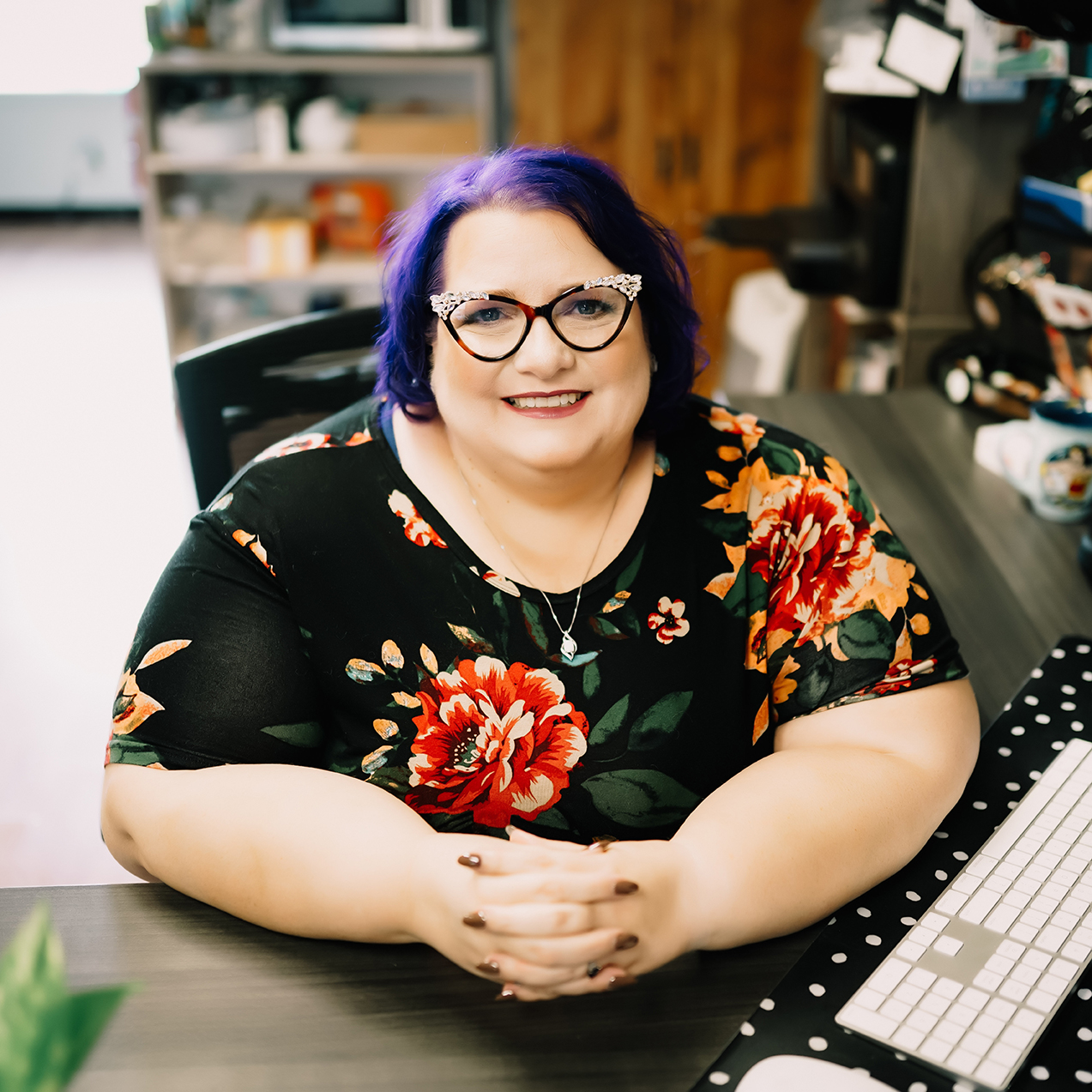
Michelle Frechette
Host
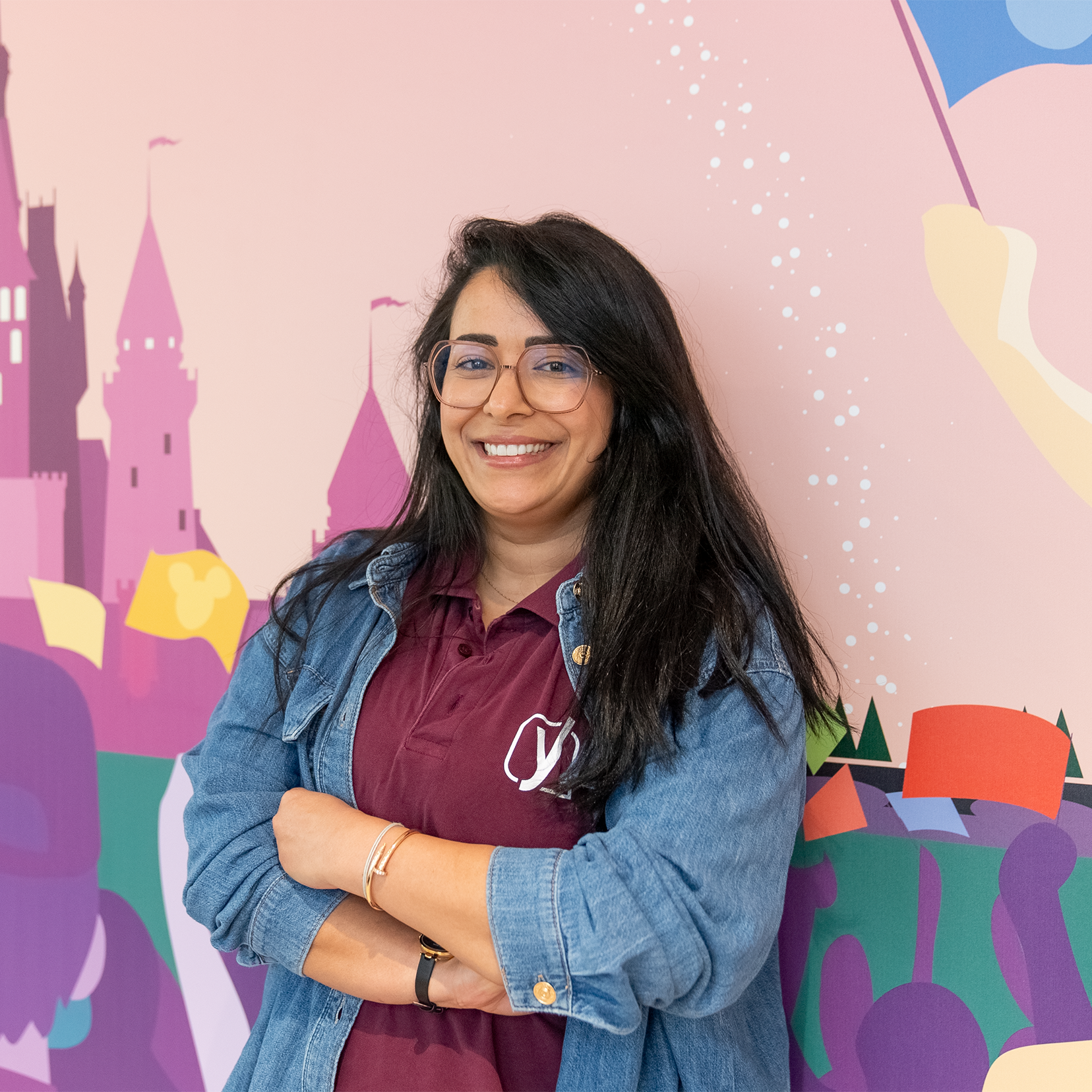
Samah Nasr
Host